The Best Filter Coffee Papers in the UK (2026): Pour-Over Papers Compared
Ask any pour-over regular and they'll say the same thing: the grinder matters, the kettle matters, but the humble paper filter is where a clean cup is…
The Best Filter Coffee Papers in the UK (2026): Pour-Over Papers Compared
Ask any pour-over regular and they’ll say the same thing: the grinder matters, the kettle matters, but the humble paper filter is where a clean cup is genuinely won or lost. The right paper controls how quickly water passes through the coffee bed, traps sediment and oils that would otherwise muddy the finish, and — if you choose badly — can add a cardboard-like, papery taste to an otherwise flawless brew.
The UK is better served here than it has ever been. Japanese brands such as Hario and Cafec are easy to buy online, Chemex bonded sheets are a niche of their own, and supermarket stalwarts such as Melitta remain the dependable default for drip machines and pour-over cones alike. The catch is that papers are not interchangeable: a V60 paper, a Melitta cone, a Kalita Wave disc and a Chemex sheet each belong to their own brewer, and buying the wrong family is the most common mistake in owner reviews. Below we’ve assessed the standout filter coffee papers available in the UK in 2026, based on manufacturer spec sheets and owner-review consensus rather than any hands-on brewing on our part. All prices were re-checked on 22 June 2026, and we’d recommend re-verifying before you order.
This article contains affiliate links. If you buy through them, we may earn a commission at no extra cost to you. It does not affect our editorial judgement or the order in which products appear.
At a Glance: The Best Filter Coffee Papers in the UK
| Pick | Paper | Best for | Typical price (June 2026) |
|---|---|---|---|
| Best overall | Hario V60 02 White (100-pack) | The pour-over benchmark — consistent flow and a clean, neutral taste | Around £6–£8 |
| Best for flavour clarity | Cafec Abaca Plus (100-pack, size 02) | Light roasts where you want sweetness and transparency on the palate | Around £10–£13 |
| Best value / supermarket pick | Melitta Original No. 4 (80-pack) | Everyday brewing in a Melitta-style cone or compatible Moccamaster | Typically around £2.50–£4 |
| Best for the Chemex carafe | Chemex Bonded Filters (100-pack) | Thick, bonded sheets that give a notably clean, tea-like body | Around £12–£16 |
How to Choose Filter Coffee Papers: What Actually Matters
Before you buy, three things have to line up: the shape and size of the paper, the bleaching (white versus brown), and the flow rate you actually want from your brewer. Get all three right and the paper fades into the background, where it belongs.
Shape and Size: Four Families, and They Are Not Interchangeable
Filter papers fall into four shape categories, and every brewer is designed around one of them. Buying across categories is the single most frequently reported mistake in owner threads — so match the shape before you even think about price or brand.
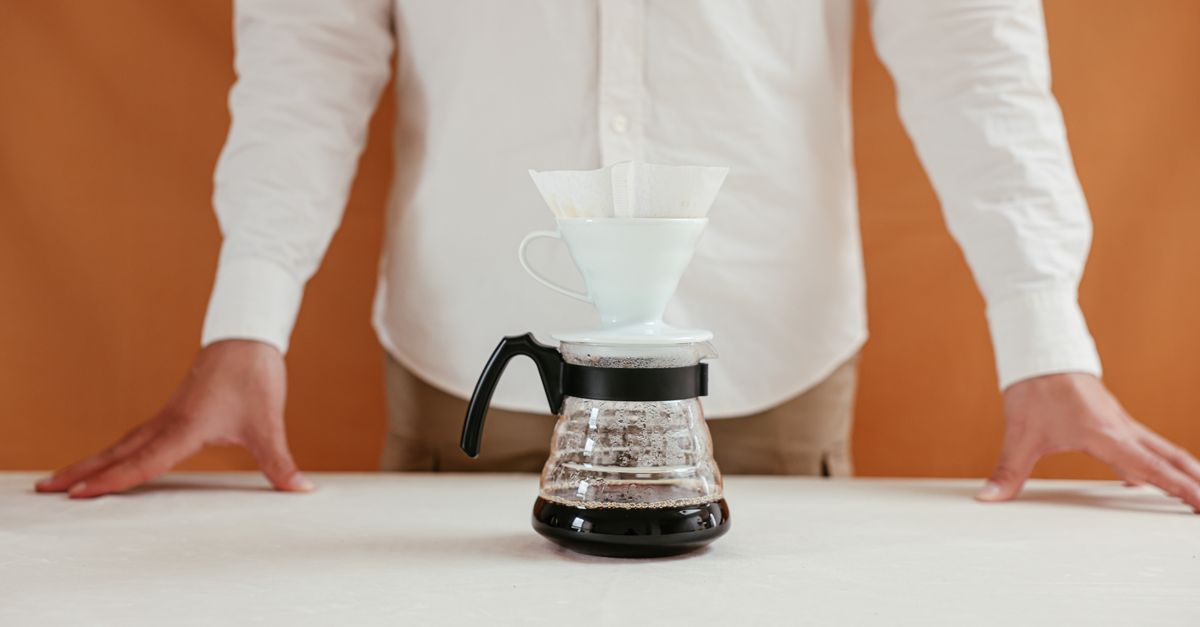
60° conical (V60-style). Hario’s V60 dripper uses a cone angled at 60 degrees with a single large hole at the bottom. Papers come in size 01 (one cup), size 02 (one to four cups) and size 03 (one to six cups), with the manufacturer publishing the precise dimensions on hario.com. These papers fit the V60 dripper only — the steep angle and single hole depend on the paper sitting flush against the cone’s spiral ribs. The 02 is the most versatile size for most UK households brewing one to three cups at a time.
Trapezoid/cone (Melitta-style). Melitta’s papers are a shallower, angled trapezoid with a flattened bottom seam. Size 1 suits one to two cups; size 4 covers one to four cups and is the most common size sold in the UK. The #4 fits Melitta-style drippers and is the paper of choice for compatible Moccamaster machines — the Melitta UK product page confirms which Moccamaster models accept it.
Kalita Wave corrugated. The Kalita Wave is often lazily lumped in with “flat-bottom” brewers, but its papers are a proprietary pleated, corrugated disc designed to sit in the Wave’s rippled base. The Wave 155 (one to two cups) and Wave 185 (two to four cups) take their own sizes. A flat-basket paper or a V60 cone paper will not fit — the Kalita official spec page is explicit that the shape is unique to the brewer.
Compatibility warning: “flat-bottom” does not mean “Kalita Wave”. If you own a Kalita Wave, do not buy flat-bottom basket papers for a flat-bed brewer or a V60 conical paper in the belief they’ll do the job. The Wave’s corrugated floor requires the matching pleated disc to create the channels that keep the bed draining evenly. This is the most commonly misled purchase in the whole category — a flat paper simply won’t seat properly, and the brew will stall or channel as a result.
Chemex bonded. Chemex filters are thick, square-folded sheets rather than pre-formed cones, and they are unique to the Chemex carafe. They come in 3-cup, 6-cup and 8-cup variants to match the size of your brewer. Nothing else fits a Chemex, and Chemex sheets fit nothing else — the folded sheet is draped into the top of the carafe, so there is no cross-compatibility with cone or basket brewers.
Bleached vs Unbleached: White Papers Versus Brown
White papers are oxygen-bleached — processed with oxygen to strip the natural wood colouring out of the pulp, leaving no chlorine residue in modern manufacturing. Brown (unbleached) papers are simply left in their natural state.
The practical difference is taste and rinsing discipline. Unbleached papers carry a noticeably stronger woody taste out of the packet, so they reward a thorough rinse with hot water before you add coffee. White papers are more neutral out of the packet, which is why many cafés default to them. The community consensus across Reddit’s r/coffee and r/pourover is consistent: once both are properly rinsed with boiling water, the difference between bleached and unbleached largely disappears from the cup. If you’re disciplined about rinsing, the brown papers will save you a little money and are perfectly fine; if you’re not, white papers are the safer bet.
Flow Rate, Fibre and Paper Thickness
The thickness and fibre composition of a paper dictate how quickly water drains through the coffee bed — and therefore how much contact time the water has with the grounds.
- Standard wood-pulp papers (Hario, Melitta) offer a middle-ground flow rate that works across a wide range of roasts.
- Faster-draining papers such as Cafec’s abaca blend let water pass more quickly, which preserves lighter, more delicate flavours — but they generally demand a finer grind to keep extraction where it should be (more on this below).
- Slow, thick papers such as the bonded Chemex sheet extend the brew and strip out more sediment and oils, producing a lighter, more tea-like body.
There’s no universal “best” here: darker roasts tend to suit slower-draining papers, while light-roast recipes aimed at clarity tend to favour faster flow. Match the paper to the roast and the brewer, not to marketing copy.
Hario V60 02 White Papers (100-pack): The Pour-Over Benchmark
Best for: anyone brewing on a Hario V60 who wants the reference-standard paper — consistent flow, a clean taste and easy availability in the UK.
The Hario V60 02 White is the paper against which most others are judged. It’s made from oxygen-bleached natural pulp, which means the wood-based fibres have been whitened without chlorine chemistry, and it’s cut to the 60° conical profile with a single seam. Each pack contains 100 papers in the versatile 02 size (one to four cups), so it covers everything from a single morning mug to a small cafetière-style batch for two.
Standout strength: neutrality and consistency. The paper itself contributes very little to the cup, and owner reviews consistently describe a dependable, even flow that makes it easy to reproduce a recipe from one brew to the next. For most UK V60 owners, this is the default for a reason.
Honest caveat: it fits a V60-style 60° cone only — and the size must match your dripper (01, 02 or 03). Order the wrong size and you’ll be folding or trimming, a complaint that recurs throughout owner threads.
Verdict: the safe, benchmark buy for V60 brewers — around £6–£8 per 100 papers at Amazon UK (price-checked 22 June 2026), with Rave Coffee and Coffee Direct also listed as stockists. Based on manufacturer spec sheets and owner-review consensus, you can’t go far wrong here.
Cafec Abaca Plus Papers (100-pack, size 02): Best for Flavour Clarity
Best for: light-roast enthusiasts chasing sweetness, clarity and a clean finish — provided you’re willing to adjust your grind.
Cafec’s Abaca Plus papers are made from a blend of abaca (Manila hemp) and wood pulp. Abaca is a stiffer, faster-draining fibre than standard wood pulp — Cafec’s own product page describes it explicitly as draining more quickly than conventional paper — and that speed is the whole point. A faster flow shortens contact time between water and coffee, which helps preserve the delicate, florals-forward character of lightly roasted beans while avoiding the muddy, over-extracted edge that slower papers can encourage.
Standout strength: clarity and sweetness. Across r/pourover and r/coffee threads, the Abaca Plus is frequently praised for producing a noticeably cleaner, sweeter cup than standard wood-pulp papers. The 02 size fits any Hario V60, and the 100-pack lasts most home brewers several months.
Honest caveat: faster flow needs a compensating finer grind than the equivalent Hario paper — if you keep the same grind setting, water will rush through and you risk a weak, under-extracted brew. The papers are also not stocked in UK supermarkets, so you’ll be ordering online, and the price premium over Hario’s own papers is real.
Verdict: the pick for light roasts and flavour transparency — around £10–£13 per 100 at Amazon UK (price-checked 22 June 2026). Specialty stockists carrying the range include Hasbean, Rave Coffee and Coffee Direct.
Melitta Original Filter Papers No. 4 (80-pack): The Supermarket Value Pick
Best for: everyday brewing in a Melitta-style dripper or compatible Moccamaster, at a price that makes single-use paper guilt-free.
Melitta’s Original No. 4 is the paper most UK households meet first. The trapezoid cone fits Melitta-style drippers and the compatible Moccamaster models confirmed on the Melitta UK product page, and the 80-pack typically costs a fraction of the Japanese imports. Crucially, an unbleached version is available for those who prefer brown papers — at broadly the same low price.
Standout strength: availability and value. At typically around £2.50–£4 per 80 at Tesco, Sainsbury’s and Waitrose online (price-checked 22 June 2026), it’s stocked wherever you do the weekly shop, which means you’re never one forgotten order away from running out. For darker roasts — rich, chocolatey, full-bodied ones — the slower drain is widely noted as a positive, giving the water longer to draw out body and sweetness.
Honest caveat: that slower drain cuts the other way. Owner consensus is that the Melitta #4 is less suited to light-roast clarity recipes, where a faster paper would preserve more delicate acidity. If your cupboard is full of Nordic-style light roasts, this isn’t the paper to pair them with.
Verdict: unbeatable value and total convenience for dark roasts and everyday drip brewing — around £2.50–£4 for 80 papers at the major UK supermarkets or Amazon UK.
Chemex Bonded Filters (100-pack): Best for the Chemex Carafe
Best for: Chemex owners who want the famously clean, sediment-free, tea-like cup the brewer was designed around.
Chemex papers are different from every other filter on this list. They’re square-folded, bonded sheets — thick, heavier-grade paper that is heat-bonded along the seams rather than stitched or crimped. Chemex’s own product listings state that the filters are 20–30% heavier than standard filter papers (see chemexcoffeemaker.com), and that extra substance is exactly what produces the Chemex character: the dense sheet traps more of the fine particles and oils that would otherwise reach the cup, yielding a bright, clear brew with a notably light body.
Standout strength: a genuinely signature cup. No other paper reproduces the combination of sediment-free clarity and tea-like texture that the bonded sheet delivers in a Chemex carafe. It’s a one-to-one relationship: the square sheet is folded and draped into the top of the carafe, where its thickness also helps support the coffee bed.
Honest caveat: compatibility and cost. The sheets come in 3-cup, 6-cup and 8-cup variants and fit the Chemex carafe only — they won’t work in a cone dripper, and no other brand’s paper seats correctly in a Chemex. At around £12–£16 per 100 at Amazon UK (price-checked 22 June 2026), they’re also the priciest papers here in absolute terms, though per-cup the cost remains modest.
Verdict: essential if you own a Chemex and want the brewer to perform as designed — around £12–£16 per 100 at Amazon UK. Fortnum & Mason has also been a listed stockist of Chemex filters, so it’s worth checking their current availability alongside the usual online channels; as ever, prices and stock should be verified at the time of ordering.
UK Buying Notes: Where to Shop for Filter Papers
The UK retail split is simple: supermarkets for Melitta, the internet for everything else.
- Melitta sits in every major UK supermarket — Tesco, Sainsbury’s and Waitrose online among them — plus Amazon UK, at typically around £2.50–£4 for an 80-pack.
- Hario and Cafec are online-first purchases in the UK. Amazon UK is the most convenient single source, with specialty coffee stockists Hasbean, Rave Coffee and Coffee Direct also carrying the Japanese brands — worth knowing if you’d rather bundle papers with your next bag of beans to spread the postage cost.
- Chemex bonded filters are widely available on Amazon UK, and Fortnum & Mason has historically stocked them, though it’s wise to verify current availability at the point of purchase.
One further practical note: because filter papers are lightweight and rarely perishable, the per-pack price differences above work out to only a few pence per brew. Don’t let a small saving talk you into the wrong shape — a paper that doesn’t fit your brewer is worth nothing regardless of how cheap it was.
Frequently Asked Questions
Do I need to rinse filter papers before brewing? Yes — a rinse with hot water does two jobs: it removes any loose paper fibres and it wets the paper so it seats properly against the brewer. Rinsing also neutralises most of the woody taste that unbleached brown papers carry out of the packet; community consensus across r/coffee and r/pourover is that a proper rinse eliminates most of the flavour difference between bleached and unbleached filters.
What’s the difference between white and brown filter papers? White papers have been oxygen-bleached to strip the natural colour from the wood pulp, while brown papers are left unbleached. Modern oxygen bleaching leaves no chlorine residue, so neither is “safer” — the real difference is that brown papers taste more woody before rinsing and so demand a more thorough rinse, whereas white papers are more neutral straight out of the box.
Which size V60 paper do I need? Match the paper to your dripper: Hario V60 01 suits a single cup, 02 covers one to four cups, and 03 covers one to six cups. The 02 is the most versatile choice for most UK households, because it brews a single mug and a small batch equally well in the same dripper.
Can I use V60 or flat-bottom papers in a Kalita Wave? No. The Kalita Wave’s base is corrugated, and it takes a proprietary pleated, corrugated disc paper — the Wave 155 for one to two cups or the Wave 185 for two to four cups. A flat-basket paper or a V60 cone will not seat properly, and the Kalita official spec page is clear that they are not interchangeable.
Which filter papers fit a Moccamaster? The Moccamaster uses a Melitta-style trapezoid cone paper, and the no. 4 size is the one to buy. The Melitta UK product page confirms which compatible Moccamaster models accept Melitta’s Original no. 4 papers, so check that page against your machine’s model number before ordering.
Where’s the cheapest place to buy filter coffee papers in the UK? For plain everyday papers, Melitta’s no. 4 is the value king — typically around £2.50–£4 for 80 at Tesco, Sainsbury’s, Waitrose online and other major supermarkets. For Hario, Cafec and Chemex papers, Amazon UK is usually the most convenient source, with specialty stockists such as Hasbean, Rave Coffee and Coffee Direct offering alternatives that are often worth bundling with a coffee order.
Whichever brewer you’re pouring into, the paper is doing more work than it gets credit for. Match the shape to the brewer, pick your flow rate to suit the roast, and rinse before you brew — and the humble filter will quietly deliver a cleaner, sweeter cup every single time.