Espresso Beans UK: The Best Beans for Home Espresso in 2026
A better espresso at home usually comes down to a handful of deliberate choices rather than expensive ones: matching the roast level to your machine…
Espresso Beans UK: The Best Beans for Home Espresso in 2026
A better espresso at home usually comes down to a handful of deliberate choices rather than expensive ones: matching the roast level to your machine, buying a bag that still has life left in it, and choosing a format that protects what’s inside. This guide to espresso beans in the UK compares eight specific products — from Lavazza’s supermarket stalwarts to London, Cotswolds and West Sussex roasters, plus one classic Italian tin — with approximate UK prices, what each is genuinely best for, and the practical details most labels leave out.
Every price below is an approximation drawn from manufacturer and retailer information at the time of writing, and they move constantly between retailers, so treat each figure as a guide rather than a fixed shelf price. Roaster-direct prices in particular shift with harvests and shipping costs.
Quick Picks at a Glance
| Product | Best for | Approx. price | Where |
|---|---|---|---|
| Lavazza Super Crema | Supermarket convenience and reliable crema | around £18–£25 / 1kg | UK supermarkets, Amazon UK |
| Lavazza Crema e Aroma | Buyers without a grinder | varies by retailer | UK supermarkets, Amazon UK |
| Lavazza Gran Selezione | Lavazza’s dark profile without robusta | varies by retailer | Larger supermarkets, Amazon UK |
| Square Mile Red Brick | Modern, sweeter speciality espresso | around £10–£12 / 250g | squaremilecoffee.com |
| Rave Coffee Signature Espresso | Best-value UK speciality, per owner consensus | around £22–£26 / 1kg | ravecoffee.co.uk |
| Union Coffee Revelation Blend | Traceable blend components and roast dates | around £22–£28 / 1kg | unionroasted.com |
| Roasted Coffee Ltd Espresso Blend | Traditional dark roast via Amazon | varies by listing | Amazon marketplace |
| Illy Classico | Long shelf life and tinned consistency | around £9–£12 / 250g tin | Waitrose, Ocado |
How to Choose Espresso Beans in the UK
Roast level comes first
Espresso is brewed fast, under pressure, in a short contact time, which is why traditional espresso blends are medium-dark to dark roasted. Darker roasts dissolve more readily, resist sourness, and produce the thick body and persistent crema that most UK drinkers associate with a proper espresso. If you are running a mid-range machine with a pressurised basket, a dark roast will flatter you far more than a light one — the pressurised basket compensates for inconsistent grind, but it cannot rescue an under-extracted light roast.
The UK speciality scene has pushed hard in the opposite direction, and lighter, filter-style roasts are now routinely sold as espresso. They can be superb — bright, fruity, tea-like — but they demand more from your grinder and your technique. A light roast that tastes like a revelation on a £1,000 setup can taste thin and sour on a £200 one.
Freshness: roast dates versus best-before dates
Coffee is at its best roughly 5 to 25 days after roasting, and noticeably flatter after about eight weeks. A bag with a “best before” date tells you almost nothing useful; a bag with a roast date printed on it tells you almost everything. This is the single most important distinction between supermarket espresso beans and roaster-direct espresso beans in the UK.
UK retail packs — Lavazza, supermarket own-brand and similar — carry best-before dates rather than roast dates. That is legally compliant, but informationally weak: a best-before date typically runs many months ahead of packing and says nothing about when the beans were actually roasted.
Why does the window matter? Roasted coffee releases carbon dioxide as it degasses. A bag that is too fresh pours gassy, foams oddly and extracts unevenly; a bag that is too old has lost the aromatic oils that give espresso its character. Named roasters publish rest guidance for exactly this reason, so treat these as roaster-specific recommendations rather than universal rules. Square Mile Coffee Roasters publishes explicit rest guidance of 7 to 21 days post-roast for espresso on its own site; Rave Coffee recommends a minimum of 5 days. Dark blends generally degas faster than light roasts, which is part of why traditional Italian-style blends settle into their stride sooner.
Grinding matters here too. Lavazza’s own guidance notes that grinding releases the essential oils locked inside each bean, and that whole bean coffee delivers the purest aromas and the most robust taste — which is precisely why whole bean beats pre-ground for espresso.
Blend versus single origin
Blends dominate espresso for a reason: roasters combine a sweet, chocolatey base — typically Brazilian or another Latin American washed arabica — with something brighter and fruitier for lift. Roasted Coffee Ltd’s Espresso Blend, for example, pairs Brazil and Central American beans with Ethiopian for what its own listing describes as dark chocolate, blackberry and toasted hazelnut notes from coffee grown at 800–1800 MASL (metres above sea level; higher-grown coffees are typically denser and often more complex). Union Coffee publishes the origin breakdown of its Revelation Blend — a Latin America and East Africa split — directly on its product pages, which makes the blend components easy to trace.
Single origins are more transparent and more variable. A single-origin Ethiopian can be a revelation in a good grinder and a frustrating, sour mess in a poor one, because there is no robusta or Brazilian base to fill in the gaps.
Packaging: valves, tins and inert gas
Whole bean is always the right format for espresso unless you have no grinder at all. Look for one-way valve bags or vacuum-sealed tins, which let carbon dioxide escape without letting oxygen in — oxygen is what stales coffee, turning the oils rancid. Lavazza seals each pack to preserve freshly roasted aroma until brewing.
Italian tinned brands go a step further by flushing the tin with inert gas. Illy’s own site confirms nitrogen flushing, and Illy packaging data describes its tins as pressurised to around 6.8 bar. The overpressure keeps oxygen from working its way in at all, which is why a supermarket tin can taste acceptable months after packing — a genuinely different proposition from a valve bag.
Crema is not a quality score
Crema is driven by two things: carbon dioxide from freshness, and robusta content. It is not a quality indicator, and it is worth stating plainly because crema is the single most over-read signal in home espresso. A stale dark roast can still produce a tan foam; a beautifully fresh light-roasted single origin may barely produce any. Lavazza Super Crema’s spec sheet lists 60% arabica and 40% robusta, and that robusta share does much of the work in the cup’s crema and body.
Where the grinder sits in the extraction hierarchy
Be honest about the hierarchy: your grinder sits ahead of your beans as a variable in what ends up in the cup. A consistent, adjustable grind lets you dial in a dose and a shot time; an inconsistent one produces channelling — water finding the path of least resistance through the puck — no matter how good the bean is. Beans remain a real lever, and freshness is the one you control most easily, but no bean choice rescues a grinder that cannot produce a repeatable grind.
Hard water and espresso clarity
Most of England sits on hard water, and the high mineral content suppresses the clarity and sweetness of espresso. The Speciality Coffee Association’s water standards set a target of 150 ppm TDS (total dissolved solids) for brewing water, and that number is the practical benchmark to aim for. Filtered water or a simple Brita jug is the standard UK fix, and it is one of the cheapest upgrades available to a home barista — limescale also shortens machine life, so the benefit is not only in the cup.
Shot maths: what 250g and 1kg actually buy you
Dosing 18g per double shot, a 250g bag yields roughly 13 double shots and a 1kg bag roughly 55. That single calculation decides which bag size makes sense for you:
- Two doubles a day: a 1kg bag is gone in about 27 days, comfortably inside a sensible freshness window. Buying a kilo is rational.
- One double a day: the same kilo stretches to roughly eight weeks, which means it is past its best by around week five. Freeze half of it in airtight portions.
That is why the 1kg format, which looks cheapest per gram, is not automatically the best value for a low-volume household. A 250g bag at around £10–£12, refreshed monthly, can beat a kilo that sits in the hopper going flat.
The Best Espresso Beans in the UK in 2026
Lavazza Super Crema
Best for: anyone who wants traditional Italian-style espresso with supermarket convenience.
Lavazza’s spec sheet lists Super Crema as a 60% arabica / 40% robusta blend, and that robusta share is the reason it produces so much crema and such a full-bodied shot. Robusta beans contain more of the compounds that stabilise foam, so a 60/40 blend pours the dense, syrupy crema that most UK drinkers picture when they think of espresso. Expect a sweet, nutty, medium-dark profile rather than the fruit-forward brightness of a speciality roast.
At around £18–£25 for a 1kg bag on Amazon UK — spread across roughly 55 double shots, a per-shot cost of well under a pound — it is one of the most economical genuinely drinkable options in the country. It is widely stocked in UK supermarkets and on Amazon UK, so resupply never requires planning.
Caveat: supermarket and Amazon packs generally carry a best-before date rather than a roast date, so you cannot tell how long ago it was roasted. Buy from a retailer with fast turnover.
Verdict: the dependable default if convenience, crema and price matter more than traceable freshness.
Lavazza Crema e Aroma
Best for: buyers who have no grinder at all.
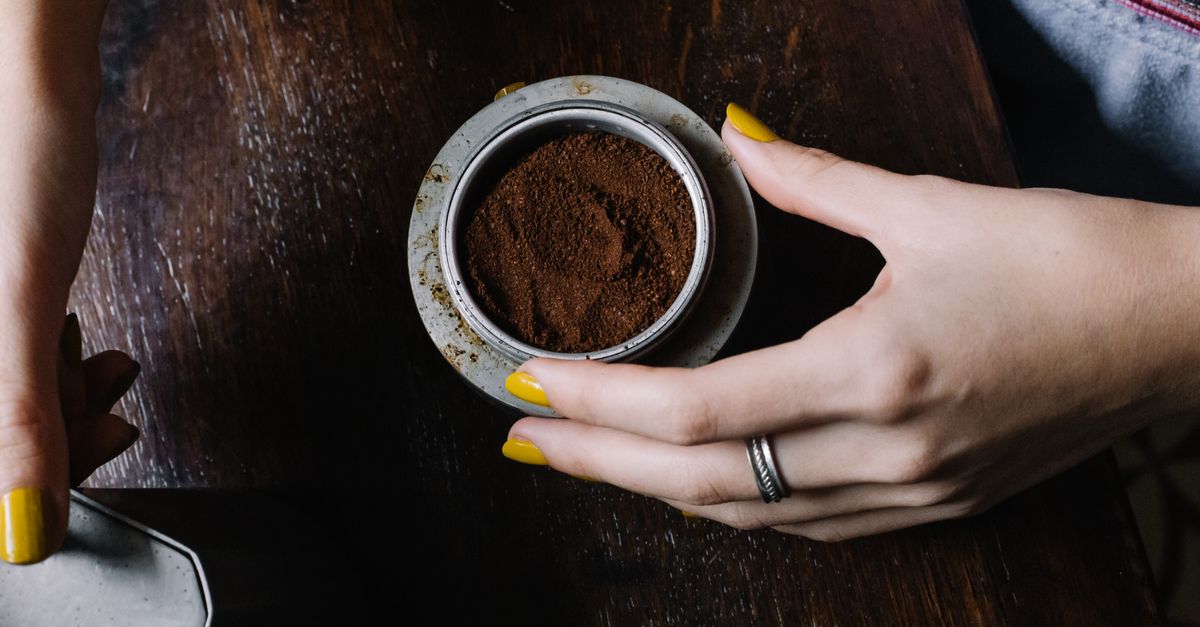
Crema e Aroma is the mainstream pre-ground option, and it is worth being blunt about the trade-off. Pre-ground coffee degasses within days and stales far faster than whole bean, because the protective layer of the bean has been broken and the surface area exposed to oxygen has multiplied. If you have no grinder, buy the smallest pack you can — a maximum of 250g — and use it within two weeks.
Within those limits, Crema e Aroma is the least-bad mainstream option in UK supermarkets and on Amazon UK: it is blended for espresso rather than filter, so it is roasted dark enough to resist sourness in a pressurised basket. It is commonly stocked alongside Super Crema in UK supermarkets.
Caveat: freshness falls off a cliff compared with whole bean, and no amount of technique compensates.
Verdict: the pragmatic choice for grinder-less households, provided you buy small and drink fast.
Lavazza Gran Selezione
Best for: drinkers who want Lavazza’s dark, familiar profile without robusta.
Gran Selezione is a 100% arabica blend, which sets it apart from Super Crema’s 60/40 arabica-robusta construction. The practical consequences are easy to predict: less crema, less body, and a cleaner, slightly more aromatic cup in exchange. It is roasted dark, so it still sits firmly in traditional Italian territory rather than the modern speciality style.
It is less commonly noted and less consistently stocked than the two blends above, so availability is the main practical question — check larger supermarkets and Amazon UK, and expect to hunt a little.
Caveat: it still carries a best-before rather than a roast date, and the reduced crema surprises drinkers moving from Super Crema.
Verdict: the arabica-only choice for anyone who finds Super Crema’s robusta edge too heavy.
Square Mile Coffee Roasters Red Brick
Best for: speciality drinkers with a capable grinder who want a sweeter, more modern espresso.
Square Mile is a London roaster, and Red Brick is its espresso workhorse — a sweeter, more modern profile than the Italian-style blends, built for milk drinks and straight shots alike. Crucially, Square Mile publishes explicit rest guidance on its own site, recommending 7 to 21 days post-roast for espresso. That is unusually useful information: it tells you the coffee will likely taste flat if you open the bag the day it arrives, and that it should hit its stride in the second and third weeks.
At around £10–£12 for 250g direct from squaremilecoffee.com, the format is deliberately small — the 250g bag works out considerably more expensive per kilo than a 1kg Italian-style blend, but it keeps the coffee inside its best window for a low-volume household.
Caveat: the price-per-kilo penalty of the 250g format is real, and a light-leaning speciality espresso punishes a weak grinder.
Verdict: the benchmark modern UK espresso from a roaster that tells you exactly when to brew it.
Rave Coffee Signature Espresso
Best for: the best-value UK speciality bag, according to owner consensus.
Rave Coffee is based in Cirencester and publishes roast dates on all of its bags — the transparency point that separates roaster-direct coffee from supermarket packs. Rave recommends a minimum rest of 5 days, shorter than Square Mile’s window, which reflects a different roast profile and development.
Owner consensus on r/espresso and r/coffee UK threads frequently cites Rave as the best-value UK speciality option, and the pricing supports that reputation: around £22–£26 for 1kg direct from ravecoffee.co.uk, with free UK delivery above around £25. At that price a kilo is a realistic everyday bag rather than an occasional treat, and it is one of the few speciality kilos that competes with supermarket pricing while retaining a printed roast date.
Caveat: it is direct-order only, so there is no nipping out to a supermarket when you run low; plan ahead.
Verdict: the strongest combination of speciality quality, printed freshness and kilo pricing in the UK.
Union Coffee Revelation Blend
Best for: buyers who want to know what is in the blend.
Union Coffee publishes the origin breakdown of Revelation Blend — a Latin America and East Africa split — on its product pages, and the roast date is printed on the bag. That combination of component-level transparency and date marking is rare at this price point, and it makes Revelation one of the easiest blends in the UK to buy with confidence rather than guesswork.
It is around £22–£28 for 1kg direct from unionroasted.com, with free UK delivery above around £25 — the same threshold as Rave. The 1kg format suits a two-doubles-a-day household that will finish the bag in roughly 27 days.
Caveat: the origin split can shift between harvests, so the bag you buy in six months may not taste identical.
Verdict: a traceable, date-stamped UK blend that rewards buyers who read the label.
Roasted Coffee Ltd Espresso Blend
Best for: Amazon shoppers who want a traditional dark roast without a subscription.
Roasted Coffee Ltd is based in Henfield, West Sussex, and its Espresso Blend is sold through the Amazon marketplace in 250g and 1kg formats. According to the manufacturer’s own listing, it is a traditional dark roast pairing Brazil and Central American beans with Ethiopian, described as having dark chocolate, blackberry and toasted hazelnut notes, with coffee grown at 800–1800 MASL. If you like the sound of a bold, chocolate-forward shot and you already buy everything on Amazon, the profile is squarely on target.
Caveat: the specifications here come from the manufacturer’s listing rather than independent corroboration. There is no third-party review base or published roast-date policy to lean on, so treat the flavour claims as the roaster’s own. On that basis it is not ranked as a best-overall pick in this guide.
Verdict: a reasonable Amazon-order dark roast, provided you buy it with the listing’s claims rather than independent verification in mind.
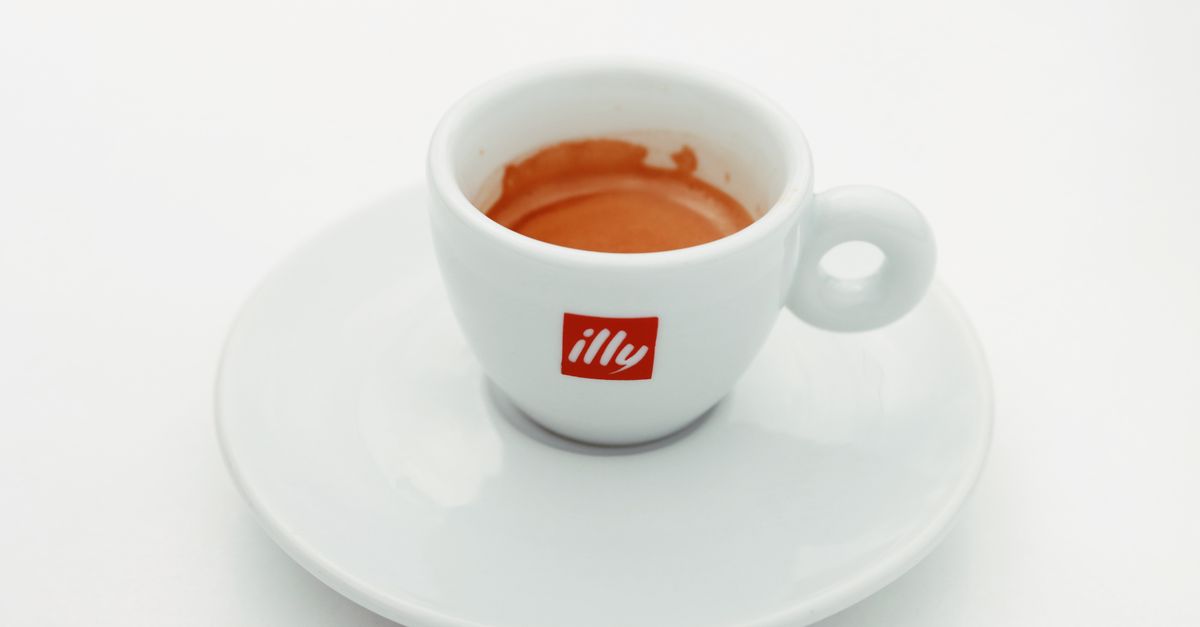
Illy Classico
Best for: the longest shelf life and total consistency.
Illy Classico is a tinned coffee, and the tin is the whole point. Illy’s own site confirms that the tins are nitrogen flushed, and Illy packaging data describes them as pressurised to around 6.8 bar — the positive pressure inside keeps oxygen out, so the coffee resists staling far longer than a bag. Illy’s spec sheet describes Classico as a 100% arabica blend of nine origins, which is a genuinely unusual level of specification for a mainstream product.
It is around £9–£12 for a 250g tin at Waitrose or Ocado, and it is available in both whole bean and pre-ground. The practical case is straightforward: it is the one option here you can keep in a cupboard for months and still drink without wincing, which makes it a useful backup bag.
Caveat: it carries a best-before date rather than a roast date, so you still cannot tell how fresh it is on the shelf, and arabica-only means noticeably less crema than a 60/40 blend.
Verdict: the tinned standby that trades peak freshness for remarkable consistency and shelf life.
UK Buying Practicalities: Amazon UK versus Roaster-Direct
The choice between Amazon UK and buying direct from a roaster comes down to two things: stock rotation and delivery economics.
Rave Coffee and Union Coffee both offer free UK delivery above around £25, which means a 1kg bag from either roaster typically ships without a delivery charge. Roaster-direct ordering also guarantees fresher stock rotation — a roaster ships what it roasted recently, whereas a marketplace or supermarket listing may have sat in a warehouse. That difference is invisible on the label of a best-before bag, which is exactly why the roast-date practices of Square Mile, Rave and Union matter so much.
A practical hybrid works well for many households: keep an inexpensive supermarket or Amazon blend as the everyday bag and order speciality kilos direct when you want to drink something with a printed roast date. If you are buying 1kg direct, remember the shot maths above — two doubles a day finishes a kilo in around 27 days, which is the pattern that makes roaster-direct kilo buying genuinely efficient.
Frequently Asked Questions
How long do espresso beans stay fresh after I open the bag? Roasted coffee is generally at its best roughly 5 to 25 days after roasting and noticeably flatter after about eight weeks, and opening the bag starts the clock on oxygen exposure. Roaster guidance varies — Square Mile suggests 7 to 21 days post-roast for espresso, while Rave Coffee recommends a minimum of 5 days — so use the printed roast date rather than the day you opened the bag as your reference.
Should I freeze espresso beans? Yes, if you buy a kilo and drink one double shot a day. A 1kg bag yields roughly 55 double shots, so at one a day it stretches to about eight weeks and is past its best by around week five. Splitting the bag into airtight portions and freezing half is the standard fix; defrost a portion fully before grinding rather than refreezing repeatedly.
Do I really need a grinder to make espresso at home? You can make espresso with pre-ground coffee, but pre-ground degasses within days and stales much faster than whole bean because the bean’s protective structure has been broken. If you have no grinder, buy a maximum of 250g at a time — Lavazza Crema e Aroma is the least-bad mainstream pre-ground option — and use it within two weeks.
What does the best-before date on a supermarket bag actually tell me? Very little about freshness. UK retail packs from Lavazza and supermarket own-brand lines carry best-before dates rather than roast dates, which is legally compliant but does not tell you when the coffee was roasted. For real information you need a bag with a printed roast date, which in practice means buying from a roaster.
Is a thick layer of crema a sign of good coffee? No. Crema is driven by carbon dioxide from freshness and by robusta content, not by quality — which is why Lavazza Super Crema’s 60% arabica / 40% robusta spec produces such a generous crema head. A stale dark roast can still foam, and a very fresh light-roasted single origin may produce almost none.
Does hard water really change how my espresso tastes? Yes, and it is one of the most commonly overlooked variables in UK kitchens. Most of England has hard water, and the high mineral content suppresses clarity and sweetness in the cup. The Speciality Coffee Association’s water standards target around 150 ppm TDS, so a filtered jug or Brita is a cheap, effective upgrade — it also reduces limescale build-up inside the machine.
How many shots will I get from a 250g or 1kg bag? At a typical 18g dose per double shot, a 250g bag yields roughly 13 double shots and a 1kg bag roughly 55. Two doubles a day empties a kilo in about 27 days, comfortably inside a good freshness window; one double a day means the same kilo lasts about eight weeks and goes flat, so buy smaller or freeze half.