Coffee Machine Cleaner: Descaler, Cleaning Tablets and What Your Machine Needs in 2026
What a coffee machine cleaner actually needs to do: descaler, cleaning tablets and daily wiping explained, with UK water hardness bands and worked…
Coffee Machine Cleaner: Descaler, Cleaning Tablets and What Your Machine Needs in 2026
“Coffee machine cleaner” covers three different jobs, and mixing them up is the commonest way to buy the wrong product. A descaler removes mineral scale from the water path. A cleaning tablet or detergent removes coffee oils from parts that touch the coffee. Wiping and purging deals with the grounds and milk that build up every day. This guide explains each job, how UK water hardness decides how often you need to descale, and what two makers, Sage and De’Longhi, actually tell owners to do. It is a desk-research guide built on the makers’ own documents and the Drinking Water Inspectorate. We have not run any cleaner through a machine, and your own manual overrides everything here.
Quick picks
| Job | Product type | What the maker’s documents say |
|---|---|---|
| Remove limescale | Descaler (Sage descaling powder, De’Longhi EcoDecalk) | Use the maker’s descaler and the machine’s descale cycle |
| Remove coffee oils | Cleaning tablets (Sage supplies them with the Barista Pro) | Run with the cleaning disc in the portafilter |
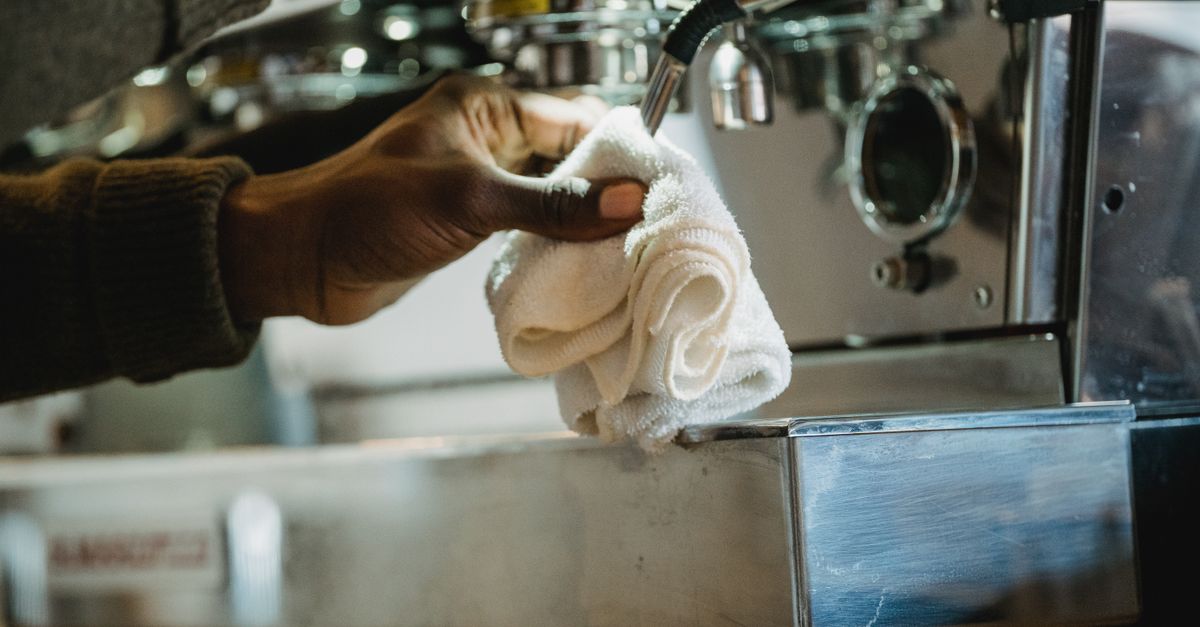
| Daily upkeep | Damp cloth, short water purge, steam wand wipe | Do it after each use |
Job 1: descaling and why hardness matters
Hard water leaves scale. The Drinking Water Inspectorate (DWI), which regulates drinking water in England and Wales, says that hard water causes scaling in hot water systems, kettles, electric irons and domestic appliances, and that mineral build-up on heating elements shortens their lifespan and makes appliances less efficient. Sage says much the same about its machines: after regular use, hard water can cause mineral build-up in and on many of the inner components, reducing the brewing flow, brewing temperature, power of the machine and the taste of the espresso.
Find your hardness
The DWI classes hardness in milligrams per litre of calcium carbonate:
- soft: up to 100
- slightly hard: 100 to 150
- moderately hard: 150 to 200
- hard: 200 to 300
- very hard: more than 300
The DWI cites World Health Organization guidance that water at 200 mg/l or above can form scale. UK drinking water rules do not set a standard for hardness, so classes vary a little between water companies. Your water company can give you the figure for your address.
How often?
There is no single schedule. De’Longhi’s product page does not give an interval and refers owners to the user manual. Sage’s Barista Pro does not make you count days: its screen shows a DESCALE alert when a cycle is needed. Sage also lists replaceable water filters among the Barista Pro features to reduce scale, recommends replacing the filter after three months, and its manual shows the filter being replaced after 90 days or 40 litres. Follow the alert or the manual rather than a rule of thumb from a retailer.
What to use
The two makers we read both point owners to their own descaler. De’Longhi says its EcoDecalk descaler uses lactic acid of vegetable origin, that you add 100 ml to the water tank and then follow your machine’s descaling instructions, and that it is recommended for all De’Longhi coffee makers. Sage lists descaling powder as an accessory for the Barista Pro, and its instructions say to add the descaling agent to the tank at the DESCALE line. We found no manual among those we read that recommends a household substitute, so our advice is to use the descaler your manual names unless it says otherwise.
The Sage Barista Pro descale, as an example
The Barista Pro user guide gives these steps. Empty the drip tray and put it back, take the water tank out and remove the filter from the tank, and fill the tank to the DESCALE line with the descaling agent. Press MENU, use the GRIND AMOUNT dial to reach DESCALE, and press the 1 CUP button. The cycle cleans in three stages, coffee, hot water and steam, and the machine beeps after each one. When it finishes, refill the tank to the MAX line and run the rinse cycle, which is also three stages. Two cautions come from the guide itself: the filter must be out of the tank before you add the powder, and hot steam may be released during descaling, so make sure the drip tray is empty and inserted first. Other machines use different buttons, so read yours.
Job 2: cleaning tablets and coffee oils
Descaler does not remove coffee oils. On the Barista Pro the screen shows a FLUSH alert when a cleaning cycle is due, and Sage says this cycle is separate from descaling. You put the cleaning disc in the filter basket, place a cleaning tablet on the disc, lock the portafilter into the group head, fill the tank to MAX, choose FLUSH in the menu and press the 1 CUP button. When the beep sounds, rinse the portafilter, disc and drip tray, and repeat the cycle if any tablet remains on the disc.
Sage also says that if filter basket holes stay blocked after using the cleaning pin, you can dissolve a cleaning tablet in hot water and soak the basket and portafilter for approximately 20 minutes, then rinse thoroughly. Not every machine has a built-in cleaning cycle, so check your manual before you buy tablets.
Job 3: the daily wipe-down
Sage’s guide asks for the small jobs that stop big ones:
- Rinse the filter baskets and portafilter under hot water straight after use to remove residual coffee oils.
- Wipe the group head interior and shower screen with a damp cloth to remove grounds, and periodically run a short flow of water through an empty basket and portafilter.
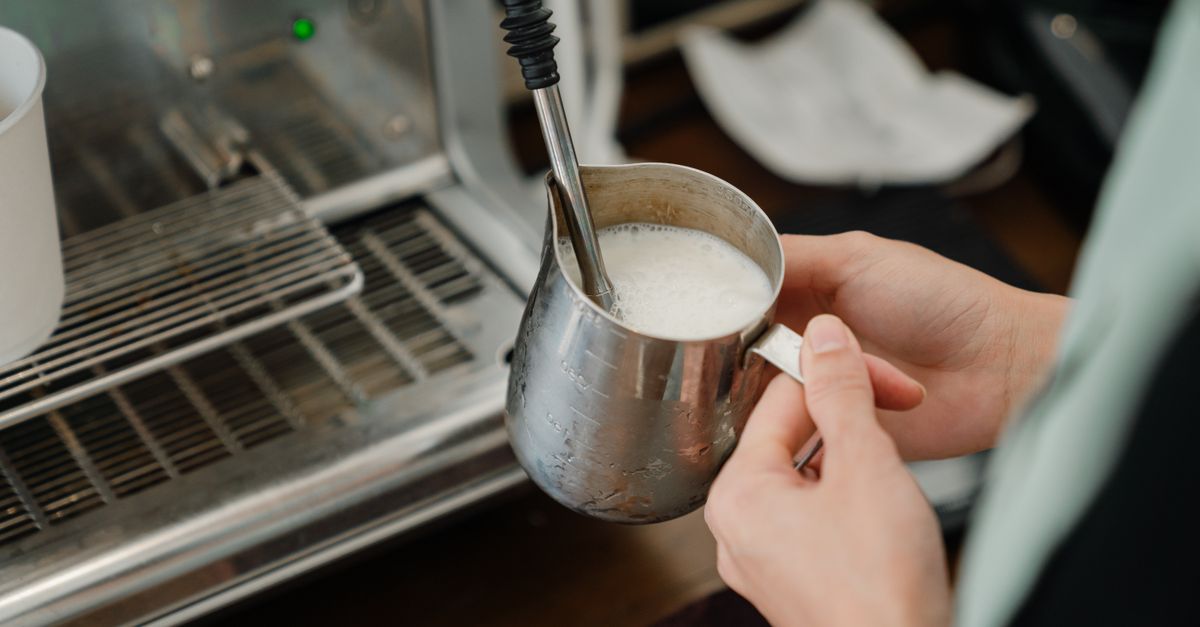
- Wipe the steam wand with a damp cloth after texturing milk, and purge it for a couple of seconds to clear remaining milk. If the steam tip hole blocks, use the supplied cleaning tool.
- Empty and wash the drip tray at regular intervals, by hand in warm soapy water. The manual says not to put parts in the dishwasher and not to use abrasive cleansers.
What to buy
- Check your manual for the descaler and cleaning product it names. De’Longhi and Sage both sell their own.
- Buy the cleaning product for the job: descaler for scale, tablets for oils.
- If you have hard or very hard water, ask whether your machine takes a water filter, because Sage describes its replaceable filter as there to reduce scale.
- Keep the pack instructions with the manual so you use the correct dose. De’Longhi’s EcoDecalk page, for example, gives 100 ml for one descale.
Frequently asked questions
Is descaler the same as coffee machine cleaner? No. Descaler removes mineral scale, and cleaning tablets remove coffee oils. Sage treats them as separate cycles on the Barista Pro.
How do I find out if my water is hard? Ask your water company for the hardness at your address. The DWI bands run from soft (up to 100 mg/l of calcium carbonate) to very hard (more than 300 mg/l).
Can I put the water filter in while descaling? Not on the Barista Pro. Sage says to remove the water filter from the tank before adding descaling powder. Check your own manual.
Is it safe to descale with the machine running? Descaling is a normal programme, but Sage warns that hot steam may be released, so empty the drip tray and keep clear of the steam wand.
The short version
Use your machine’s own descaler for scale and its cleaning tablets for coffee oils, and do the daily wipe-down so neither job gets out of hand. Find your local water hardness, match it to your machine’s setting, and follow the descale or flush alert if your machine has one.