Best Instant Coffee UK 2026: The Ultimate Buyer's Guide
Instant coffee has spent decades fighting a reputation for being the compromise option — the jar at the back of the cupboard that you reach for only when…
Best Instant Coffee UK 2026: The Ultimate Buyer’s Guide
Instant coffee has spent decades fighting a reputation for being the compromise option — the jar at the back of the cupboard that you reach for only when there is no time for anything else. Yet the category has shifted dramatically, and the best instant coffee in the UK for 2026 can deliver genuine flavour, aroma and body that rival a freshly brewed cafetière cup, all in the time it takes to boil a kettle. Whether you need a rapid morning cup before the commute, a reliable desk brew, or a lightweight option for camping, there is a premium instant product that delivers without the fuss.
This guide is built on manufacturer specifications, expert publications and owner-review consensus. We have examined every major sub-category — from 100% Arabica freeze-dried jars through micro-ground hybrids to the surprising budget options that outperform their price tag — to give you a definitive, skimmable breakdown.
Quick Picks: The Best Instant Coffee in the UK at a Glance
| Product | Best For | Approximate Price |
|---|---|---|
| Mount Hagen Organic Freeze-Dried | Best overall premium quality | Around £8–£12 (100g jar) |
| Nescafé Azera Americano | Best “barista-style” everyday brew | Around £5–£7 (100g jar) |
| Kenco Millicano Wholebean Instant | Best for milky coffees | Around £5–£6 (100g jar) |
| Starbucks VIA Instant | Best premium single-serve | Around £15–£18 (box of 50 sticks) |
| Carte Noire Instinct | Best French-heritage Arabica | Around £5–£7 (100g jar) |
| Lidl Bellarom Gold | Best budget freeze-dried | Around £2–£3 (200g jar) |
| Aldi Alcafe Gold | Best value-per-cup | Around £2–£3 (200g jar) |
| Tesco Finest Instant | Best supermarket own-brand Arabica | Around £4–£5 (100g jar) |
How to Choose: What Separates a Great Instant From a Mediocre One
Before diving into specific products, it helps to understand the production methods and bean choices that determine what ends up in your cup. The differences are not trivial — they fundamentally alter the taste, aroma and texture of the final brew.
Freeze-Dried vs Spray-Dried: The Defining Distinction
The majority of budget supermarket instant coffee is spray-dried. In this process, liquid coffee concentrate is blasted with hot air at approximately 200°C, rapidly turning it into a fine powder. The method is fast and cost-effective, but the extreme heat destroys many of the delicate volatile aromatics — the chemical compounds responsible for coffee’s complex smell and flavour. The result is frequently a one-dimensional, harsher cup.
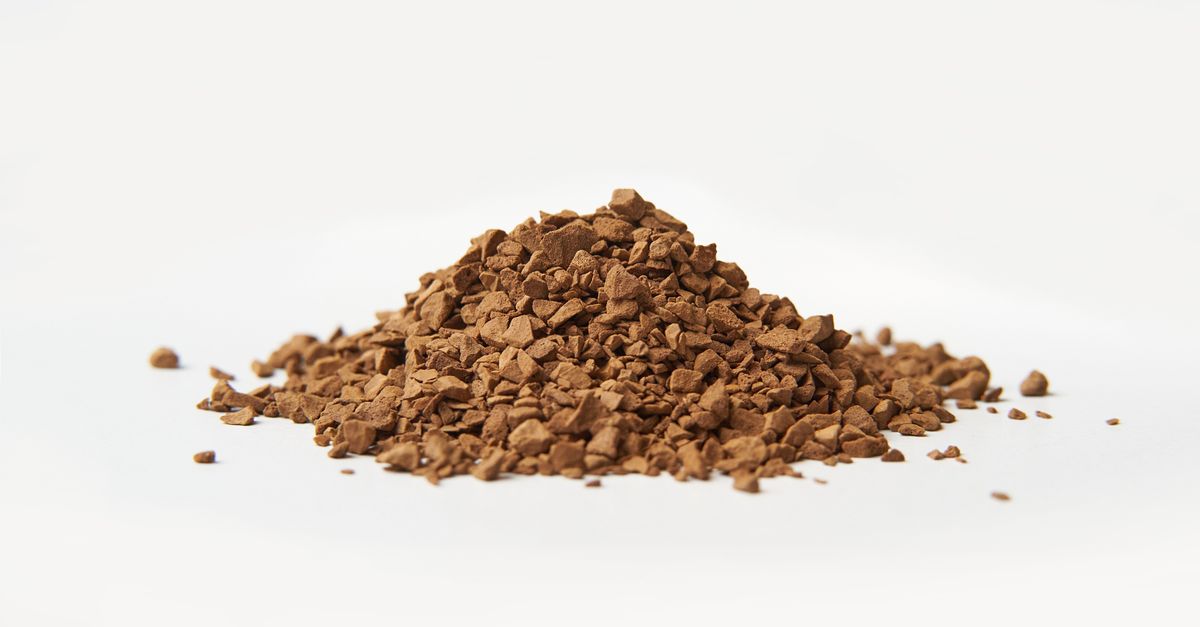
Freeze-drying is a fundamentally superior process. Liquid coffee is frozen, then placed in a vacuum chamber where the ice sublimates directly into vapour without ever passing through a liquid phase. Crucially, this entire process stays below 0°C, which preserves the volatile aromatics that spray-drying destroys. The result is a richer, more complex taste with noticeably less harshness. You can usually identify freeze-dried coffee by its distinctive granule shape — small, irregular chunks rather than a fine powder.
Bean Origin and Roast Profile
Just as with fresh-ground coffee, the origin and species of the bean matter enormously. Arabica beans, typically grown at higher altitudes, deliver a smoother, sweeter and more nuanced flavour profile, often with notes of fruit, chocolate or nuts. Robusta beans are hardier, higher in caffeine and produce a thicker crema, but they can taste rubbery or bitter if over-roasted. The best instant coffees use a high proportion of Arabica, and the premium tier often uses 100% Arabica.
Micro-Ground Hybrids: A Third Category
Some products do not fit neatly into the freeze-dried or spray-dried binary. Brands such as Kenco Millicano and Nescafé Azera blend soluble instant coffee with micro-ground roast coffee — finely milled real coffee that does not fully dissolve. This adds body, texture and a layer of flavour that pure instant cannot achieve. The trade-off is a slight sediment at the bottom of the cup, which is intentional. It is important to note that “micro-ground” carries no legal definition in UK food law; it is a marketing descriptor rather than a regulated standard.
UK Food Standards: What “Instant Coffee” Actually Means
Under UK Food Standards Agency regulation, a product labelled as instant coffee (soluble coffee) must contain a minimum of 95% coffee solids by dry weight. This ensures you are getting predominantly coffee rather than fillers or bulking agents, regardless of brand or price point.
The Reviews: Full Product Breakdown
Mount Hagen Organic Freeze-Dried
Best for: Drinkers seeking the highest-quality pure instant experience, particularly those who value ethical sourcing.
Key specs and what’s included:
- 100% Arabica highland beans
- Bean origins: Papua New Guinea, Honduras and Peru
- Certified USDA Organic and Fairtrade (Rainforest Alliance certification appears on some SKUs — verify current packaging)
- 100g jar
- Approximately 50p–60p per cup
Standout strength: Mount Hagen is the instant coffee that most frequently converts self-described coffee snobs. Reddit’s r/coffee community regularly cites it as the top premium instant recommendation, which is notable given that forum’s general disdain for the category. The freeze-dried granules deliver a smooth, clean cup with genuine origin character — the highland Arabica beans provide a gentle acidity and sweetness that is rare in instant form. The triple-certification (USDA Organic, Fairtrade, and often Rainforest Alliance) also makes it the strongest ethical choice on this list.
Caveat: At around £8–£12 for a 100g jar, it is the most expensive option here on a per-cup basis. The flavour, while excellent for instant, still will not fully replicate a pour-over or espresso.
Verdict: The gold standard of pure instant coffee — worth every penny for those who want the best jar on the shelf.
Where to buy: Amazon UK, where it has accumulated over 4,600 reviews with a circa 4.5-star average.
Nescafé Azera Americano
Best for: Drinkers who want a bolder, darker cup with a “barista-style” appearance without paying premium single-origin prices.
Key specs and what’s included:
- Proprietary blend of freeze-dried instant coffee and micro-ground roast coffee
- Available in 100g and 170g jars
- 100g jar typically around £5–£7
Standout strength: Azera Americano is not a standard freeze-dried instant — Nescafé explicitly markets the micro-ground element, and this is the source of its signature crema (the thin golden-brown layer that forms on top of the brew) and its “barista-style” positioning. The micro-ground particles add a depth and intensity that pure soluble coffee cannot achieve, producing a darker, more robust cup that holds up well to milk. It sits in a compelling middle ground: more complex than a basic supermarket jar, but significantly cheaper than Mount Hagen.
Caveat: Because it is a hybrid blend rather than a pure freeze-dried product, it does not deliver the same clean, origin-driven clarity as a premium 100% Arabica instant. The micro-ground element also leaves a slight residue in the cup.
Verdict: The best “barista-style” instant for everyday drinking — bold, characterful and competitively priced.
Where to buy: Widely stocked at Amazon UK and major UK supermarkets.
Kenco Millicano Wholebean Instant
Best for: Milky coffee drinkers who want body and texture without a full bean-to-cup machine.
Key specs and what’s included:
- Freeze-dried instant coffee blended with micro-ground whole-bean coffee
- 100g jar, typically around £5–£6
Standout strength: Kenco Millicano pioneered the whole-bean instant hybrid category in the UK, and it remains a strong choice. The micro-ground whole-bean component adds a creamy, full-bodied finish that works particularly well in lattes and flat whites made at home. The blend is designed to mimic the mouthfeel of freshly brewed coffee, and the slight sediment at the bottom of the cup — which is entirely normal and intentional — is a sign that real ground coffee is present in the mix.
Caveat: The sediment, while intentional, will not appeal to drinkers who expect a completely clear cup. The flavour profile is designed to pair with milk, so it can taste slightly flat when drunk black.
Verdict: The ideal instant for milky drinks — creamy, full-bodied and widely accessible.
Where to buy: Widely stocked at Tesco, Sainsbury’s, Waitrose and Ocado.
Starbucks VIA Instant
Best for: Drinkers who want a recognised coffeehouse flavour profile in a portable, single-serve format.
Key specs and what’s included:
- Micro-ground and soluble coffee blend (not pure freeze-dried)
- Single-serve sticks, approximately 3.3g each
- Box of 50 sticks, typically around £15–£18 on Amazon UK
- Most common UK variants: Colombia and Pike Place
Standout strength: Starbucks VIA dominates the premium instant SERP landscape for good reason — it delivers a consistent, recognisable coffeehouse flavour in a format that is genuinely portable. The single-serve sticks are ideal for travel, office desks and camping, as each stick contains a pre-measured 3.3g serving that eliminates the guesswork of spooning from a jar. The Colombia variant offers a brighter, more acidic profile, while Pike Place delivers a smoother, well-rounded cup. The micro-ground and soluble blend produces a body that is closer to a brewed filter coffee than a traditional instant.
Caveat: On a per-cup basis, a 50-stick box at around £15–£18 works out to roughly 30p–36p per cup — significantly more than spooning from a jar. The individual packaging also generates more waste.
Verdict: The most convenient premium instant on the market — perfect for on-the-go drinkers who want coffeehouse consistency.
Where to buy: Amazon UK.
Carte Noire Instinct
Best for: Drinkers who want a smooth, approachable 100% Arabica instant from a recognised heritage brand.
Key specs and what’s included:
- 100% Arabica beans
- Freeze-dried
- 100g jar, typically around £5–£7
- French heritage brand
Standout strength: Carte Noire Instinct occupies a comfortable middle ground between the budget supermarket jars and the premium tier occupied by Mount Hagen. The 100% Arabica composition gives it a smoother, sweeter character than Robusta-heavy blends, and the freeze-dried process preserves enough aromatic complexity to make it a genuinely enjoyable daily drinker. Its French heritage branding positions it as a slightly more sophisticated choice, and it is one of the most widely accessible mid-tier freeze-dried options on the UK market.
Caveat: It does not have the single-origin transparency or ethical certifications of Mount Hagen, so drinkers who prioritise traceability may find it lacking.
Verdict: A solid, dependable 100% Arabica freeze-dried instant that balances quality and accessibility.
Where to buy: Widely available at Tesco and Sainsbury’s.
Lidl Bellarom Gold
Best for: Budget-conscious drinkers who refuse to compromise on the freeze-dried process.
Key specs and what’s included:
- Freeze-dried instant coffee
- 200g jar, typically around £2–£3
Standout strength: This is the sharpest finding in the entire guide. Lidl Bellarom Gold is freeze-dried at a spray-dried price. As covered above, freeze-drying preserves volatile aromatics by keeping the process below 0°C, while spray-drying blasts coffee with approximately 200°C air — destroying those compounds. Yet almost every other instant coffee at the £2–£3 price point is spray-dried. Bellarom Gold breaks that rule, delivering the superior flavour preservation of freeze-drying for a budget price. It is the genuinely non-obvious budget pick that surprises coffee enthusiasts and delivers exceptional value per cup from a 200g jar.
Caveat: It is still a budget coffee — the bean quality and roast profiling will not match a premium 100% Arabica single-origin jar. It is best viewed as the best-tasting cheap option rather than a premium competitor.
Verdict: The best-kept secret in budget instant — freeze-dried quality at a spray-dried price.
Where to buy: Lidl stores nationwide.
Aldi Alcafe Gold
Best for: Maximising value per cup above all other considerations.
Key specs and what’s included:
- Spray-dried instant coffee
- 200g jar, typically around £2–£3
Standout strength: Alcafe Gold is the definitive value-per-cup play. A 200g jar at around £2–£3 delivers an exceptionally low cost per serving, making it the kind of coffee you buy for a busy office kitchen, a student flat or a large household where consumption is high. The spray-dried process (using approximately 200°C hot air, as covered above) means it sacrifices aromatic complexity for cost efficiency, but the result is still a perfectly serviceable everyday cup.
Caveat: Because it is spray-dried rather than freeze-dried, it will taste flatter and more one-dimensional than Lidl’s Bellarom Gold at the same price point. If flavour is your priority, spend the same amount at Lidl instead.
Verdict: The ultimate value-per-cup jar — ideal for high-volume, budget-led consumption.
Where to buy: Aldi stores nationwide.
Tesco Finest Instant
Best for: Supermarket shoppers who want an own-brand freeze-dried Arabica without visiting a discounter.
Key specs and what’s included:
- Freeze-dried Arabica instant coffee
- 100g jar, typically around £4–£5
Standout strength: Tesco Finest Instant bridges the gap between the budget tier and the premium mid-market. By using 100% Arabica beans and the freeze-dried process, it delivers a noticeably smoother and more aromatic cup than standard own-brand instants. The 100g jar size is convenient, and the pricing at around £4–£5 makes it an accessible step up for shoppers who are already doing their weekly shop at Tesco and do not want to make a separate trip to a discounter or order online.
Caveat: At around £4–£5 for 100g, it is priced closely enough to Carte Noire Instinct (around £5–£7 for 100g) that some shoppers may prefer to spend marginally more for the branded alternative.
Verdict: The best supermarket own-brand freeze-dried Arabica — a convenient, quality step-up from basic jars.
Where to buy: Tesco stores and online.
UK Practical Notes: Regulation and Retail
When shopping for instant coffee in the UK, there are a few practical and regulatory points worth keeping in mind.
First, as covered above, the UK Food Standards Agency requires that any product sold as instant (soluble) coffee must contain a minimum of 95% coffee solids by dry weight. This regulation applies equally to a £2 budget jar and a £12 premium import, so you can be confident that what you are buying is predominantly coffee regardless of price.
Second, the term “micro-ground” — used prominently by Nescafé Azera, Kenco Millicano and Starbucks VIA — has no legal definition in UK food law. It is a marketing descriptor, not a protected standard. This does not mean the claim is meaningless (the physical presence of ground coffee in these products is real and verifiable in the sediment they leave), but it does mean there is no regulatory threshold a product must meet to use the term on its packaging.
Third, UK stockists for the products in this guide are widespread. Amazon UK carries the premium and single-serve options (Mount Hagen, Starbucks VIA, Nescafé Azera). Tesco, Sainsbury’s, Waitrose and Ocado stock the mid-market brands (Kenco Millicano, Carte Noire Instinct, Tesco Finest Instant). Aldi and Lidl are the exclusive stockists for their respective budget lines (Alcafe Gold and Bellarom Gold).
Frequently Asked Questions
How much caffeine is in a cup of instant coffee?
According to NHS figures, a typical 200ml cup of instant coffee contains approximately 60–80mg of caffeine. This is meaningfully lower than brewed coffee, which typically contains around 80–120mg per cup. The difference comes down to extraction: instant coffee is brewed industrially and then dehydrated, so the final cup contains only the caffeine that was captured in the soluble form, whereas brewed coffee extracts caffeine directly from the grounds over a longer contact time with water.
What is the difference between freeze-dried and spray-dried instant coffee?
Freeze-drying preserves volatile aromatics — the chemical compounds responsible for coffee’s flavour and aroma — because the process stays below 0°C throughout. Spray-drying uses hot air at approximately 200°C, which destroys many of those compounds. In practical terms, freeze-dried instant coffee tastes richer, smoother and more complex, while spray-dried instant tends to taste flatter and more bitter.
How long does instant coffee last?
According to manufacturer guidance consensus, unopened instant coffee typically has a shelf life of around 2 years. Once opened, it should ideally be consumed within 3–6 months before notable flavour loss occurs. The degradation is caused by exposure to oxygen and moisture, both of which gradually break down the remaining aromatic compounds. Storing the jar in a cool, dry place with the lid tightly sealed will maximise its usable life.
Is Nescafé Azera freeze-dried?
No — or at least, not purely. Nescafé Azera Americano is a proprietary blend of freeze-dried instant coffee and micro-ground roast coffee. The micro-ground element is what produces the crema layer and the “barista-style” character that Nescafé markets explicitly. Calling it a standard freeze-dried instant would be inaccurate, as the micro-ground component is central to its flavour profile and texture.
Does micro-ground instant coffee dissolve completely?
No, it does not — and this is intentional. Products that contain micro-ground coffee (such as Kenco Millicano, Nescafé Azera and Starbucks VIA) leave a slight sediment at the bottom of the cup because the finely milled real coffee particles do not fully dissolve in water. This sediment is the trade-off for the added body and texture that micro-ground blends provide. Drinkers who find sediment off-putting should opt for a pure freeze-dried product such as Mount Hagen or Carte Noire Instinct instead.
Which is better value: Lidl Bellarom Gold or Aldi Alcafe Gold?
Both cost approximately £2–£3 for a 200g jar, but Lidl Bellarom Gold is the stronger choice for flavour because it is freeze-dried, while Aldi Alcafe Gold is spray-dried. As covered above, the freeze-drying process preserves volatile aromatics by staying below 0°C, whereas spray-drying uses approximately 200°C air that destroys them. At the same price point, Bellarom Gold delivers noticeably more flavour for the same money. Alcafe Gold remains a perfectly serviceable budget option for high-volume, cost-led consumption.