Sage Coffee Grinder Review 2026: Smart Grinder Pro, Dose Control Pro and the Rivals Worth Knowing
A better grinder improves coffee more than a better espresso machine does, because grind size decides how fast water moves through the bed and therefore…
Sage Coffee Grinder Review 2026: Smart Grinder Pro, Dose Control Pro and the Rivals Worth Knowing
A better grinder improves coffee more than a better espresso machine does, because grind size decides how fast water moves through the bed and therefore how much flavour ends up in the cup. That single fact is why the Sage coffee grinder range sells as well as it does in the UK: the Smart Grinder Pro sits in the middle ground between a budget blade grinder of around £40, which smashes beans into uneven dust, and a prosumer flat-burr machine at around £700 that demands serious counter space and serious technique. It is stocked almost everywhere — Amazon UK, Currys, John Lewis and specialist roasters among them — which is half the reason it became the default recommendation.
The complication is that “Sage coffee grinder” can mean three quite different purchases: the flagship standalone grinder, a cheaper standalone grinder, or a grinder built into an espresso machine. This guide compares the current UK line-up against the rivals most often shortlisted alongside it, working from manufacturer specifications, named retailer listings and aggregated owner reviews — desk research rather than hands-on lab time. Prices move constantly, so treat every figure here as a starting point rather than a fixed fact.
Quick picks
| Pick | Model | Best for | Approx. UK price |
|---|---|---|---|
| Best overall | Sage Smart Grinder Pro (BCG820) | Switching between espresso and filter without buying twice | approximately £180–£230 |
| Best value | Sage Dose Control Pro (BCG600) | Filter-first drinkers who want burr quality without the electronics | approximately £130–£170 |
| Best all-in-one | Sage Barista Pro (BES878) | Grinder and espresso machine in a single, compact body | sold as a complete machine — check the current UK listing for price |
Sage or Breville? The one check to make before you buy anything
This is the single most useful thing to understand about the range, and it has nothing to do with grind quality.
Breville Group manufactures the same machines and sells them under two names: Sage in the UK and Europe, and Breville in the United States, Australia and New Zealand. The model numbers are identical across those markets — a Smart Grinder Pro is a BCG820 on both sides of the Atlantic, and the Dose Control Pro is a BCG600.
Separately, there is an entirely unrelated UK Breville brand that makes kettles and irons. It has nothing to do with coffee, and it is not the same company. If you see “Breville” on a UK listing and it is a kettle, that is the other one.
The trap is importing. US-market Breville units are 110V and are built for a different mains supply, and they carry no UK warranty and no UK service path — a repair or a warranty claim has nowhere to go. Before considering an import to save money, check Sage UK’s own warranty and support pages at sage.com/en-GB to see exactly what cover and service a UK-purchased unit receives. For most buyers, the cheaper sticker price does not offset losing both a warranty and a route to repair, and the voltage mismatch is not something a plug adapter resolves.
How to choose a Sage coffee grinder: the five things that actually matter
Stepped versus stepless adjustment
A stepped grinder moves between fixed numbered grind positions. The Smart Grinder Pro’s 60 settings are stepped. This matters most at the espresso end: an espresso shot is sensitive enough that one setting can choke the machine and the next can run through too fast, leaving you hunting for a position between two clicks that does not exist. A stepless grinder gives you an infinitely variable collar, so you can land anywhere in that gap.
Conical versus flat burrs
This is a completely separate question from stepped versus stepless, and the two are often muddled together. Conical and flat describe the geometry of the burr set itself. The practical consequence for a conical machine like the Sage models is that the espresso end of the range leans more on technique — dose, distribution, tamp — than a stepless flat-burr machine at similar money would.
Grind range across brew methods
A narrow grinder is a grinder you outgrow. Most cheap electric grinders are filter-only; most cheap espresso grinders are espresso-only. The Sage standalone models hedge in both directions, which is why they get recommended to people who have not yet settled on one brew method.
Dosing and workflow
Timed dosing grinds for a set number of seconds. The problem is that changing grind size changes the flow rate, so a finer setting delivers less coffee in the same time — which is why most grinders force you to re-dial the timer whenever you adjust the burrs. Dosing IQ, on the Smart Grinder Pro, automatically adjusts the dose when you change the grind setting, so you are not re-dialling every time you nudge the burrs finer. The Dose Control Pro does not have it.
Retention, static and calibration
Retention is the ground coffee that stays behind in the chute and burr chamber after you finish grinding; it comes out in your next dose, which means the first shot after a change is not quite what you dialled in. Static is the related problem of grounds clinging to the chute and clumping on the way out. Both are consistent themes in owner feedback on the Sage models, and the third is calibration: the plastic grind-adjust collar can drift out of alignment, so the numbers on the dial no longer match the true burr position. Sage publishes re-zeroing instructions for that, and owners regularly report needing them.
Sage Smart Grinder Pro (BCG820) review
Best for: anyone who wants one grinder that covers espresso and filter brewing, bought from a shop that will actually honour a warranty.
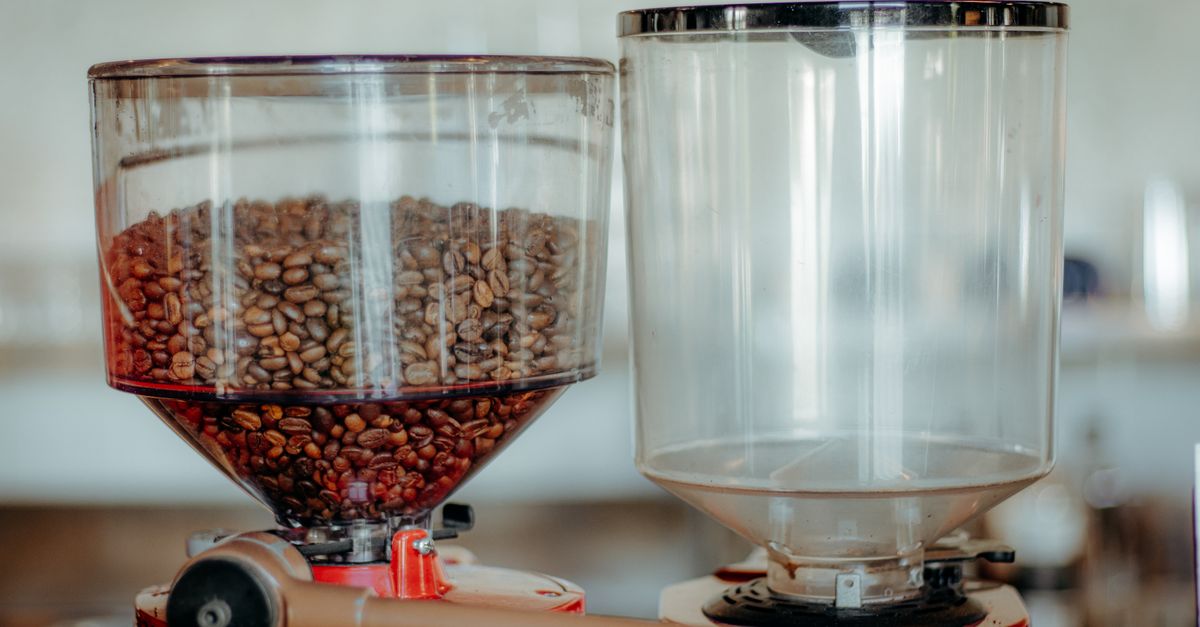
Manufacturer specifications for the Smart Grinder Pro list 60 stepped grind settings, stainless steel conical burrs, a 450g bean hopper — comfortably enough beans for multiple brewing sessions without a refill — an LCD interface, and Dosing IQ automatic dose adjustment. It ships with interchangeable portafilter cradles covering 50–54mm and 58mm baskets, so it will dose straight into the basket of most home and prosumer espresso machines, plus a grinding container for batch brewing or for grinding ahead.
The standout strength is breadth. Sage’s published grind range runs from espresso through to French press, and that versatile middle ground is unusual at this price — it is precisely why it gets recommended to people who have not yet decided what they drink. Owner reviews on Amazon UK and John Lewis consistently praise the direct-to-portafilter dosing and the build quality for the money. Cworks, a UK retailer, describes it as “one of the best-selling electric burr grinders in the UK” and “the perfect all-rounder for people who aren’t fixed purely to one brew method” — a fair summary of where it sits.
The honest caveats come from the same owner reviews. It is not a quiet machine. Static and clumping at the chute are recurring complaints, as is retention when you change settings — the grounds left inside from the previous grind setting turning up in the next dose. The plastic grind-adjust collar can drift and need recalibrating, which is why Sage publishes re-zeroing instructions. And because the adjustment is stepped rather than stepless, the espresso end of the range relies more on technique than a stepless flat-burr machine would.
On the Turkish question, be careful with marketing copy. Sage’s published range covers espresso through to French press; the finest settings are marginal for true Turkish, and that is the consensus among owners on Reddit’s r/espresso and r/coffee. Any claim of Turkish fineness should be checked against Sage’s own spec sheet wording for the current model before you buy on the strength of it.
Verdict: the safest first serious grinder you can buy in the UK, provided you accept stepped adjustment at the espresso end and a bit of countertop housekeeping.
Where to buy: Amazon UK, Currys, John Lewis, or direct from Sage — the BCG820 product page on sage.com/en-GB lists the current UK specification (checked 2026).
Sage Dose Control Pro (BCG600) review
Best for: filter drinkers, and anyone who wants conical burr quality at the lowest sensible price and does not need an LCD.
The Dose Control Pro uses a stainless steel conical burr set from the same design family as the Smart Grinder Pro and covers a similarly wide grind range, but strips out the electronics: no LCD and reduced dose-programming depth compared with the BCG820. What you keep is the burr set, the cradles, and the same broad brew-method coverage. One thing to note if you like numbers: Sage does not prominently publish the burr diameter for the BCG600, so treat any specific figure you see for it with suspicion — it is not a spec the manufacturer puts front and centre.
The standout strength is straightforward value. You are giving up convenience features, not the burr set, and for someone brewing filter coffee most mornings the LCD and the deeper dose programming were unlikely to earn their keep anyway. The caveat is the same stepped, conical geometry as its more expensive sibling, so the espresso end is equally technique-dependent — and if you are regularly dialling in espresso, the missing Dosing IQ means more fiddling with the timer.
The decision rule between the two is clean. If you are filter-first and the Dose Control Pro is genuinely discounted, it is the better buy. If you are regularly dialling in espresso, the Smart Grinder Pro’s Dosing IQ earns its keep and justifies the step up. Bear in mind the two price bands nearly touch at the edges — approximately £170 sits at the top of the Dose Control Pro’s range and at the bottom of the Smart Grinder Pro’s — so a promotion can close the gap entirely and make the decision for you. Treat the gap as a moving target rather than a fixed number.
Verdict: the same burrs and the same range without the screen; the right answer for filter-first buyers, the wrong one for daily espresso dialling.
Where to buy: Amazon UK, Currys, John Lewis, or direct from Sage — the BCG600 product page on sage.com/en-GB lists the current UK specification (checked 2026).
Sage Barista Pro (BES878) review — the all-in-one option
Best for: buyers with limited counter space who want one machine doing both jobs, and who would rather not buy a separate grinder at all.
The Barista Pro is the third meaning of “Sage coffee grinder”: an espresso machine with the grinder built in. Its headline feature is ThermoJet, which Sage states brings the machine to temperature in roughly three seconds — a meaningful difference for anyone who currently waits several minutes for a boiler machine to warm up before pulling a shot. It uses a 54mm portafilter.
Two things must be checked rather than assumed. First, the built-in grinder offers fewer settings than the standalone BCG820, and the exact published count should be confirmed on Sage’s own spec sheet for the current BES878 rather than taken from a listing summary. Second, do not assume the built-in grinder uses the same burr set as the BCG820 — that equivalence should not be implied without verifying Sage’s published specifications for both machines.
The standout strength is the footprint and the workflow: one plug, one warm-up, no beans migrating between two machines. The caveat is upgrade path. If the grinder is the part you eventually want to improve, an all-in-one gives you less room to do that than a standalone grinder and a separate machine would.
Verdict: the neatest solution if space and simplicity outrank maximum grind adjustability — but verify the grinder’s setting count on Sage’s spec sheet before you buy on the strength of it.
Where to buy: typically the same UK stockists that carry the standalone grinders — Amazon UK, Currys and John Lewis, or direct from Sage via sage.com/en-GB for the BES878 (checked 2026).
The rivals to weigh up
The names most often shortlisted alongside the Sage models are the Baratza Encore ESP, the Fellow Opus, the DF54, the Eureka Mignon Manuale, the Wilfa Uniform, and 1Zpresso’s hand grinders — the last of these being manual, with no motor at all. Specs and street prices on this group shift between retailers, so check the current listing rather than relying on a figure quoted in a forum thread from a year ago.
The trade-off to hold in your head is a single axis. The Sage models win on retail availability — they are on the shelf at Currys and John Lewis, which matters if you want to return a faulty unit in person — and on all-in-one brew-method breadth, covering espresso through to French press in one machine. They lose on retention and on micro-adjustment against the stepless flat-burr designs in that rival group at similar money. If espresso dialling precision is your priority above everything else, the stepless end of that list is where you should be looking; if you want one grinder for several brew methods, bought locally, the Sage case is stronger.
What owners actually say
Aggregated owner feedback from Amazon UK and John Lewis reviews, plus threads on Reddit’s r/espresso and r/coffee (checked 2026), is remarkably consistent in both directions.
Praise: direct-to-portafilter dosing without making a mess on the worktop, and build quality that feels appropriate to the price paid.
Complaints: static and clumping at the chute; retention when changing grind settings; and the plastic grind-adjust collar drifting out of calibration, requiring the re-zeroing procedure Sage publishes.
Workarounds owners report: a bellows puff before removing the portafilter, to clear retained grounds out of the chute; and single-dosing with the hopper removed, which sidesteps retention from the hopper and makes switching beans easier. None of these are exotic fixes, but they are the kind of thing you should expect to do — the machine rewards a little routine maintenance rather than running on autopilot.
UK warranty, parts and serviceability
Because this is a British purchase, serviceability matters as much as the spec sheet. Sage publishes warranty terms and a parts page listing replacement burr availability on its UK site, which is the correct place to check two things before buying: the current warranty length, and whether burrs are treated as a covered component or as a consumable you buy separately. Both are policy details that change, so confirm them on the warranty and parts pages at sage.com/en-GB rather than relying on a figure quoted in a review. The wider point is that a UK-supplied Sage has a UK service path behind it — the thing an imported 110V Breville unit conspicuously does not.
FAQ
Is a Sage coffee grinder the same as a Breville? Yes, in the sense that matters and no, in the sense that catches people out. Breville Group sells the identical machines under the Sage name in the UK and Europe, and as Breville in the US, Australia and New Zealand, with matching model numbers such as BCG820 and BCG600. Separately, an unrelated UK Breville brand makes kettles and irons and has nothing to do with coffee.
Can I import a US Breville grinder and use it in the UK? US-market units are 110V, built for a different mains supply, and they carry no UK warranty and no UK service path — if something fails, there is nowhere to send it. Check Sage UK’s warranty and support pages at sage.com/en-GB to see what a UK-purchased unit actually includes. For most buyers, the discount does not cover losing both cover and a repair route.
Does the Smart Grinder Pro grind fine enough for espresso? Its published range covers espresso, so yes. The limitation is the stepped adjustment: because the dial moves between fixed positions, you may find one setting chokes the shot and the next runs through too fast, with nothing in between. Buying the same coffee from the same roaster consistently helps, but a stepless machine gives you finer control at the espresso end.
Can it grind for Turkish coffee? Sage’s published range runs from espresso through to French press, and the finest settings are widely considered marginal for true Turkish among owners on r/espresso and r/coffee. If Turkish is your main brew method, verify the current wording on Sage’s own spec sheet for the model before buying, and treat the finest setting as a compromise rather than a purpose-built capability.
Which portafilter sizes do the cradles fit? The Smart Grinder Pro ships with cradles covering 50–54mm and 58mm portafilters, which between them account for most home and prosumer espresso machines. It also includes a grinding container, so you can grind into a tub for batch brewing instead of dosing straight into a basket.
Are the burrs covered by the warranty? Sage publishes both warranty terms and replacement burr availability on its UK site, so the answer depends on the current policy rather than a fixed rule. Check the warranty length and whether burrs count as a covered part or a user-replaceable consumable on the warranty and parts pages at sage.com/en-GB. Because the burr set is the part that determines grind quality over time, this is worth confirming before you buy rather than after.
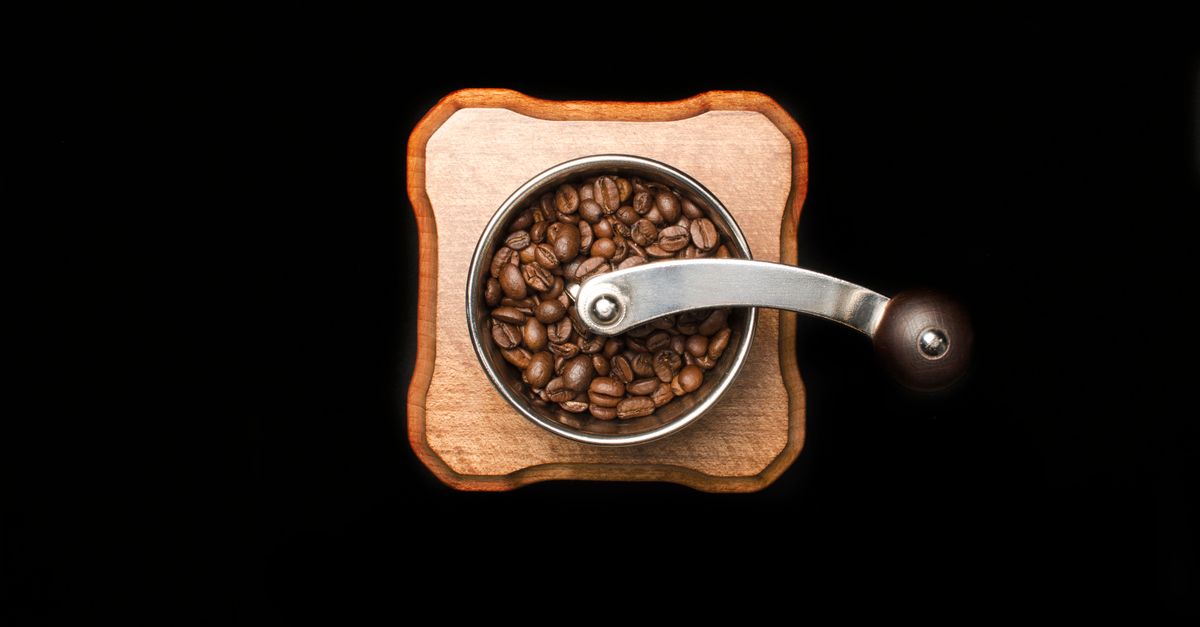
Is the Sage grinder loud? Owner reviews on Amazon UK and John Lewis consistently note that it is not a quiet machine — it is a recurring criticism rather than an occasional one. If you grind early in the morning in a small flat, plan for the noise rather than being surprised by it; if that is a dealbreaker, a hand grinder such as the 1Zpresso models trades the motor for manual effort and near-silence.