Filter Coffee Grind Size UK: Settings, Charts and the Best Grinders for 2026
Last updated: January 2026. Prices in this guide are approximations, checked against UK retailer listings in early 2026 — they move constantly between…
Filter Coffee Grind Size UK: Settings, Charts and the Best Grinders for 2026
Last updated: January 2026. Prices in this guide are approximations, checked against UK retailer listings in early 2026 — they move constantly between sellers, so treat every figure as a starting point rather than a fixed price.
Getting filter coffee grind size right is the single highest-return adjustment a UK home brewer can make, and it costs nothing. A burr grinder with enough adjustment range will turn a sour, thin cup into something sweet and clear without changing the bean, the brewer or the water. This guide sets out what “medium” actually means in microns, how to translate that into a setting on a V60, Chemex, AeroPress, cafetiere or filter machine, how UK water hardness shifts the target, and which grinders sold in the UK in 2026 are genuinely worth the money for filter brewing.
Affiliate disclosure: this guide contains affiliate links. If you buy through one of them, we may earn a commission at no extra cost to you. It does not affect which grinders are included or how they are described.
Quick Picks
| Grinder | Best for | Approximate UK price |
|---|---|---|
| Baratza Encore ESP | Best all-round electric filter grinder | around £175–£220 |
| Fellow Ode Gen 2 | Best filter-focused electric | around £295–£330 |
| Timemore Chestnut C3 Pro | Best budget hand grinder | around £65–£80 |
| 1Zpresso K-Ultra | Best premium hand grinder | around £175–£200 |
| Wilfa Uniform | Best value flat-burr electric | around £199–£229 |
Why Grind Size Matters More Than Your Brewer
Coffee extraction is a surface-area problem. Coarser particles expose less surface to water per gram, so they give up their dissolved solids more slowly; finer particles expose more surface, so they extract faster. Filter brewing runs at atmospheric pressure over roughly two to five minutes, which means the grind has to sit inside a fairly narrow window for the brew to finish in the right time carrying the right concentration of dissolved solids.
Too fine and you over-extract: the bed stalls, the paper clogs, and the cup tastes bitter, drying and astringent. Too coarse and you under-extract: water rushes straight through and you get sourness, a salty edge and a thin, tea-like body with no sweetness. The fix is nearly always grind, not a new brewer or a different bag of beans.
How do you know what “right” is? The Speciality Coffee Association (SCA) Golden Cup standard puts a well-extracted filter brew at 18–22% extraction yield, and that figure is the backbone for the taste guidance below: sour and thin points to under-extraction (go finer), bitter and drying points to over-extraction (go coarser).
What “Medium Grind” Actually Means in Microns
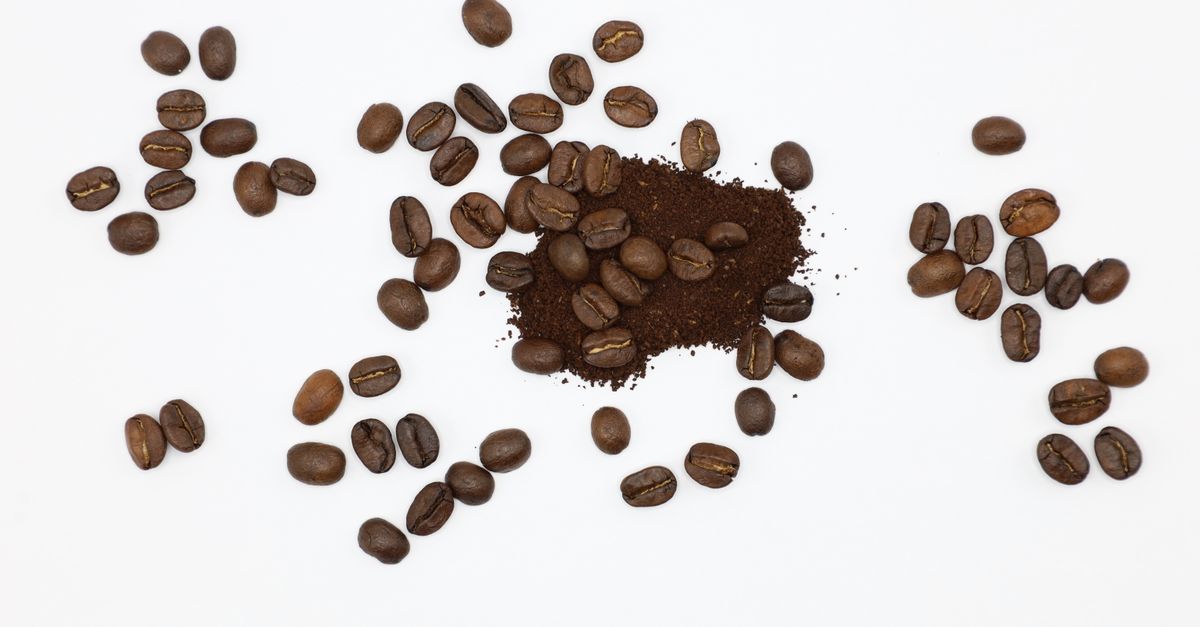
Filter coffee generally sits at a median particle size of roughly 600–800 microns (µm).
The analogy you will read most often online is wrong. A medium filter grind is closer to granulated sugar or coarse sand than to table salt or caster sugar — those sit at only around 200–500 µm, which is far finer than most filter brewers want. Measure a filter grind against a salt cellar and you will end up grinding too fine.
For published reference points, Kruve’s reference sieve chart and the Honest Coffee Guide particle-size chart are the two most commonly cited sources for matching a visual texture to a micron range, and both are worth looking up if you want a photo comparison to work from.
Two caveats matter more than the headline number:
- The bands overlap. The V60 band (~500–700 µm) overlaps the general filter band (~600–800 µm). These are medians, not walls.
- Distribution matters as much as the median. Two grinders set to the same average particle size can taste completely different, because one produces a tight spread of similarly sized particles and the other produces a wide spread full of fines and boulders. Fines over-extract and boulders under-extract in the same brew, which is why a cheap grinder can make a good brewer taste muddy.
How UK Water Hardness Changes Your Grind Target
This is the part most grind guides skip, and it matters in Britain more than almost anywhere.
Water hardness varies enormously across the UK. Thames Water and South East England sit at roughly 250–300 mg/l (ppm CaCO₃), while Scottish Water and Welsh Water supplies are typically below 50 ppm. Those figures come from the water companies’ own annual quality reports, which are published publicly and are the right place to check your own postcode.
The practical consequence: hard water suppresses extraction, so the same coffee, brewer and grinder will need a slightly finer grind in London or the South East than in Glasgow or mid-Wales to reach the same place on the 18–22% extraction scale. If you move house between a soft-water and a hard-water area, expect to nudge the dial a step or two finer going into the hard-water region — and expect your kettle to tell you the same story.
UK Terminology and Buying Pre-Ground
Two wording notes that will save you ordering the wrong thing:
- The immersion brewer most people call a French press is a cafetiere in the UK, and UK roasters label their grind options accordingly.
- A filter machine is the countertop batch brewer (Moccamaster-style), not a “drip brewer”.
If you buy pre-ground from a UK roaster, ask specifically for “filter grind” or “cafetiere grind” — those are the trade terms used at checkout. Grind (London), Rave Coffee and Has Bean all offer grind selection when you order. Note that Grind sells both whole bean and pre-ground coffee on subscription, so it has a commercial interest in the advice it publishes in its ground coffee guide — worth knowing when you read it.
Pre-ground is always a compromise, because it locks you to one setting. That single grind will rarely suit every brewer you own, and a bag ground for a cafetiere will run far too fast in a V60. If you own more than one brewer, whole bean plus a grinder is the only way to get the best from both.
Filter Coffee Grind Size Chart by Brewer
| Brewer | Grind setting | Approximate median particle size | Typical brew time |
|---|---|---|---|
| V60 / pour-over cone | Medium-fine | ~500–700 µm | 2:30–3:30 |
| AeroPress | Medium-fine to medium | ~500–700 µm | 1:30–2:30 |
| Chemex | Medium to medium-coarse | ~700–900 µm | 4:00–5:00 |
| Filter machine (e.g. Moccamaster) | Medium | Middle of the general filter band | Judge by taste |
| Cafetiere | Coarse | Coarse end of the general filter band | Judge by taste |
The cafetiere sits at the coarse end of the general filter range, and that is for a mechanical reason: a metal mesh plunger lets fine particles straight through into the cup, and the long steeping time keeps extracting them. Go coarser than you would for a paper-filtered brew and the cup stays clean; go too fine and you get grit in the bottom of the mug and a bitter, over-extracted finish.
The Two Signals That Tell You to Adjust
You do not need a particle analyser to dial in a grind. Two signals do most of the work.
Brew time. If a V60 that normally drains in 2:45 is still dripping at 4:00, the grind is too fine — go coarser. If it finishes in 1:45, it is too coarse — go finer. Judge the filter machine and cafetiere by taste rather than the clock, since neither has a consistent drain-down time to compare against.
Taste. Sour, salty and thin means finer. Bitter, drying and astringent means coarser. Change one variable at a time and move in small steps, because the window between under- and over-extracted is narrower than most people expect.
How to Choose a Filter Grinder
Burrs, not blades. A burr grinder crushes beans between two shaped surfaces to a controlled size; a blade grinder chops them at random, producing a mix of dust and chunks that no setting can fix. For filter, burr geometry is the single biggest determinant of cup quality.
Enough adjustment steps. You need to be able to nudge the grind in small enough increments to move from a 3:00 V60 to a 2:45 V60. A grinder with a handful of broad clicks will leave you stuck between sour and bitter.
Conical versus flat burrs. Conical burrs (common in hand grinders) and flat burrs (common in filter-focused electric grinders) both hit the filter band, but they distribute particles around it differently — which is why two grinders set to “medium” can taste noticeably different, and why you should expect to re-dial when you change grinder rather than assuming your old setting carries over.
Retention. Retention is the ground coffee left inside the chute after grinding. High retention means stale grounds from yesterday’s darker roast land in today’s cup, and it makes single-dosing by weight unreliable. Low-retention designs are worth paying for if you switch beans often.
Electric or hand. Hand grinders cost less for a given burr quality and take up no counter space; electric grinders remove the physical effort but add motor, noise and price. For filter, both are viable — the reviews below cover both.
The Best Filter Grinders in the UK for 2026
Baratza Encore ESP — best all-round electric filter grinder
Best for: anyone who wants one dependable electric grinder for filter and the occasional cafetiere, with a large UK owner base to compare notes with.
Key specs and what’s included: the current 2026 UK SKU is the 220–240V, UK 3-pin version, so it plugs straight into a British socket without an adaptor. The manufacturer lists 40 steps, and Baratza’s own brew guide puts the filter range at approximately steps 15–25. It is sold in the UK via Bella Barista, Coffee Hit and Amazon UK. Warranty is handled through the UK importer — check the current importer details on the Bella Barista listing before you buy, since importer arrangements can change between batches.
Why it stands out: 40 steps across a burr set designed to handle everything from espresso-fine to cafetiere-coarse gives you plenty of room inside the filter band, and the 15–25 filter range means you are working in the middle of the dial rather than pinned against the end stop. The large UK owner base also means published starting points and troubleshooting threads are easy to find.
The honest caveat: it is not a dedicated filter grinder — you are paying for espresso-capable range you may never use, and the filter-focused grinders below will edge it on particle consistency for pour-over.
Verdict: the safest first burr grinder for UK filter brewing, at approximately £175–£220, with UK voltage and UK retail support.
Where to buy: Bella Barista, Coffee Hit, Amazon UK.
Fellow Ode Gen 2 — best filter-focused electric grinder
Best for: pour-over brewers who want the cleanest possible particle distribution and don’t need espresso capability at all.
Key specs and what’s included: 64mm flat burrs — the Gen 2 has been sold with SSP burrs or Fellow’s own flat burrs depending on the SKU, so check which is fitted before ordering. Fellow’s spec sheet states less than 0.5g retention, which is the headline figure for anyone who weighs beans in and expects nearly all of them in the cup. UK stockists include Batch Coffee and Amazon UK.
Why it stands out: the 64mm flat burr geometry plus sub-0.5g retention is a combination built specifically for filter: tight particle distribution for clarity in the cup, and little enough retained coffee that yesterday’s grounds don’t contaminate today’s brew. The anti-static design also keeps the grind area clean, which matters more than it sounds when you are grinding daily.
The honest caveat: it is a filter-first machine, so it will not grind for espresso, and at this price you are paying for pour-over quality rather than versatility.
Verdict: the pick if filter is all you brew, at approximately £295–£330.
Where to buy: Batch Coffee, Amazon UK.
Timemore Chestnut C3 Pro — best budget hand grinder
Best for: anyone testing whether a burr grinder is worth it, or brewing one or two cups a day, or needing a grinder that travels.
Key specs and what’s included: the S2C (Steel to Conical) burr set at 30mm. Available at approximately £65–£80 via Amazon UK or Timemore direct.
Why it stands out: the S2C burr set is the reason this grinder matters. At this price, most hand grinders use cheap ceramic or stamped burrs that smear the grind; steel conical burrs of this type give consistency that would have cost considerably more a few years ago. For filter — which is far more forgiving than espresso — that consistency is genuinely enough.
The honest caveat: the adjustment range is coarser than the 1Zpresso below, so fine-tuning inside the filter band takes longer, and grinding 30g for a batch brew by hand is real work.
Verdict: the cheapest credible route into burr-ground filter coffee, at approximately £65–£80, with no mains voltage concerns at all.
Where to buy: Amazon UK, Timemore direct.
1Zpresso K-Ultra — best premium hand grinder
Best for: brewers who want the fine adjustment of a high-end electric grinder but with no motor, no noise and no counter footprint.
Key specs and what’s included: 90 clicks per rotation and a 48mm stainless steel burr. Available at approximately £175–£200 via 1Zpresso EU or Amazon UK.
Why it stands out: 90 clicks per rotation gives exceptionally granular control — you can move a fraction of a step at a time and hear the difference in the cup, which is exactly what you need when dialling in a V60 in hard water. The 48mm stainless burr is a size normally associated with far more expensive grinders, and stainless holds its edge better than coated carbon steel over years of daily grinding.
The honest caveat: it costs roughly the same as the Baratza Encore ESP while requiring you to turn the handle yourself — you are buying grind quality and adjustment precision instead of convenience.
Verdict: the best choice if you value control and portability over motorised convenience, at approximately £175–£200.
Where to buy: 1Zpresso EU, Amazon UK.
Wilfa Uniform — best value flat-burr electric
Best for: filter drinkers who want flat-burr cup clarity from a countertop electric grinder without stepping up to Ode money.
Key specs and what’s included: 41 steps, Nordic filter-first design. Available at approximately £199–£229 via Lakeland and Amazon UK.
Why it stands out: 41 steps is a genuinely useful number of increments inside the filter range, and the grinder’s design brief is filter rather than espresso — so the adjustment range is spent where filter brewers actually need it, not on espresso-fine settings most owners never touch.
The honest caveat: verify the burr diameter against Wilfa’s own spec sheet before buying. Figures circulating online vary between sources, and we don’t repeat an unverified count here — check Wilfa’s published specification directly.
Verdict: the flat-burr electric to buy if the Ode is out of budget, at approximately £199–£229, with UK high-street retail support.
Where to buy: Lakeland, Amazon UK.
Grinder Starting Settings: Where to Begin
Treat every starting setting as a manufacturer’s starting point, not a universal answer — your water, beans and brewer will all shift it.
- Baratza Encore ESP: Baratza’s own brew guide puts the filter range at approximately steps 15–25. Start in the middle of that and adjust from taste.
- Fellow Ode Gen 2: follow Fellow’s brew guide for the starting point on your burr set, since SSP and Fellow burrs are calibrated differently.
- Wilfa Uniform, Timemore Chestnut C3 Pro, 1Zpresso K-Ultra: use the manufacturer’s own brew guide for the starting click or step, then use brew time and taste to move from it. We deliberately don’t publish invented numbers for these — burr revisions can change calibration between production runs, and only the manufacturer can tell you the current figure for the unit you own.
The routine is the same regardless of grinder: start at the manufacturer’s suggested filter setting, brew one cup, taste it, then adjust one increment at a time in the direction the taste tells you — finer for sour, coarser for bitter.
Other Models UK Buyers Commonly Ask About
Several grinders come up repeatedly in UK filter discussions but are outside this guide’s main picks: the Sage Smart Grinder Pro, which is a very high-volume UK seller through John Lewis and Currys; the Comandante C40; the Timemore Sculptor 064S; the Kingrinder K6; the budget electric Wilfa Svart/Classic; and the Niche Duo. We have left them out of the main recommendations because we only include grinders whose current UK specifications, burr configuration and stock we can state from the manufacturer’s own published figures.
Frequently Asked Questions
Is pre-ground coffee ever good enough for filter? It can be, if you drink it fresh and you buy a grind matched to one brewer. The problem is that pre-ground locks you to a single setting, so a bag ground for a cafetiere will run far too fast in a V60 and vice versa. If you order from a UK roaster, ask for “filter grind” or “cafetiere grind” and use it within a few weeks of the roast date.
Do I really need a burr grinder, or will a blade grinder do? A blade grinder chops beans at random, producing a mix of fine dust and coarse chunks in the same batch. The dust over-extracts and the chunks under-extract, so no setting on your brewer can rescue the cup. If filter quality matters to you, a budget burr grinder such as the Timemore Chestnut C3 Pro will beat a blade grinder costing similar money.
Why does my V60 stall and drain far too slowly? A stalled pour-over almost always means the grind is too fine, so the bed compacts and the paper clogs. Go one or two increments coarser and brew again before changing anything else. Very light roasts and heavy agitation can contribute too, but grind is the first variable to test.
Does hard water really change my grind setting? Yes, and noticeably. Hard water — around 250–300 ppm CaCO₃ in Thames Water and South East England supplies — suppresses extraction compared with the sub-50 ppm water typical of Scottish Water and Welsh Water. That means the same coffee usually needs a slightly finer grind in London than in Glasgow to hit the SCA’s 18–22% extraction target.
Can I use one grinder setting for both my V60 and my cafetiere? Not well. The V60 sits in the medium-fine part of the range at roughly 500–700 µm, while a cafetiere needs a coarse grind at the coarse end of the general filter band, because its metal mesh lets fine particles through and the long steep keeps extracting them. Buy a grinder with enough steps to move between the two quickly rather than settling on a compromise.
How much should I expect to spend on a filter grinder in the UK? Budget hand grinders such as the Timemore Chestnut C3 Pro start at approximately £65–£80. All-round electric grinders such as the Baratza Encore ESP sit at approximately £175–£220, and filter-focused flat-burr electrics such as the Fellow Ode Gen 2 run to approximately £295–£330. Hand grinders give more grind quality per pound; electric grinders charge you for convenience.
Will my grinder hold its setting over time? Burr alignment and calibration can drift with wear, and deep cleaning after oily dark roasts will often require you to re-find your setting. Follow the manufacturer’s cleaning guidance for your model, and re-check your usual filter setting against brew time and taste after any strip-down.
Our Sourcing and Price Notes
Every specification in this guide is taken from named sources: Baratza’s published step count and brew guide, Fellow’s spec sheet for the Ode Gen 2’s retention figure and burr options, Timemore’s S2C burr specification, 1Zpresso’s click-per-rotation and burr diameter figures, and Wilfa’s own spec sheet for the Uniform’s steps. Water hardness figures come from the water companies’ annual quality reports; particle-size reference ranges come from Kruve’s published sieve chart, the Honest Coffee Guide chart, and the SCA Golden Cup extraction standard.
Where we refer to owner sentiment, it is drawn in aggregate from Amazon UK and Trustpilot listings for these models; we don’t publish review counts we haven’t verified on the day of writing. All prices are approximations checked against UK retailer listings in early 2026 and will move — confirm the current figure with the retailer before buying.
The Bottom Line
Start by grinding coarser than you think you need, then walk finer until the cup stops tasting sour. In the UK, add one detail to the standard advice: if your water is hard — anywhere in the Thames Water or South East England range of roughly 250–300 ppm — your grind target sits a step or two finer than a soft-water brewer’s. Pick a grinder with enough adjustment steps to make those small moves reliably, and the rest is just tasting.