Coffee Bean Storage Guide UK: The Best Containers for Fresh Beans in 2026
You can spend hundreds on a grinder and still drink flat, papery coffee, because the single biggest variable in the cup is how the beans were treated…
Coffee Bean Storage Guide UK: The Best Containers for Fresh Beans in 2026
You can spend hundreds on a grinder and still drink flat, papery coffee, because the single biggest variable in the cup is how the beans were treated after roasting. Oxygen begins breaking down the volatile aromatic oils the moment the bag is opened, and a rolled-up paper bag resting on a warm worktop is about the worst home you can give a fresh roast. This coffee bean storage guide for UK kitchens compares the containers that genuinely slow that decline in 2026, explains what the specifications actually mean in practice, and resolves the freezer question that reliably divides the home barista community.
Disclosure: this article contains affiliate links, and we may earn a commission if you buy through them, at no extra cost to you. Our editorial policy page explains how products are selected and described, and this disclosure sits above the first commercial link in line with CAP/ASA guidance.
Quick Picks
| Container | Best for | Typical UK price (checked 2026) |
|---|---|---|
| Fellow Atmos Vacuum Canister | Overall best | approximately £35–£50 (0.7L) |
| Planetary Design Airscape Kilo | Full 1kg bags | approximately £40–£55 |
| OXO Good Grips Pop Container | Best value | approximately £15–£25 |
| Tightvac Coffeevac 500g | Simplicity and travel | approximately £10–£15 |
| Kilner clip-top jar (1L) | Budget and decanting | approximately £8–£12 |
Why Coffee Bean Storage Matters More Than You Think
Roasted coffee is a perishable product that happens to sit on a shelf rather than in a fridge. The roast date on the bag is effectively a use-by date in disguise, and everything after it is a race against oxidation — the reaction in which oxygen attacks the oils and aromatic compounds that give coffee its sweetness, fruit and complexity.
There is a second process running at the same time. Beans continue to degas for days after roasting, releasing carbon dioxide from inside the bean. That is precisely why roasters fit one-way valves to their bags in the first place: the valve lets CO₂ escape so the bag does not inflate and burst, while doing its best to keep outside air from travelling back in. Any container you buy is competing with that design, and most cheap kitchen jars fail at least one part of the job — either they trap gas, or they let air seep past the seal.
The Four Enemies of Fresh Coffee
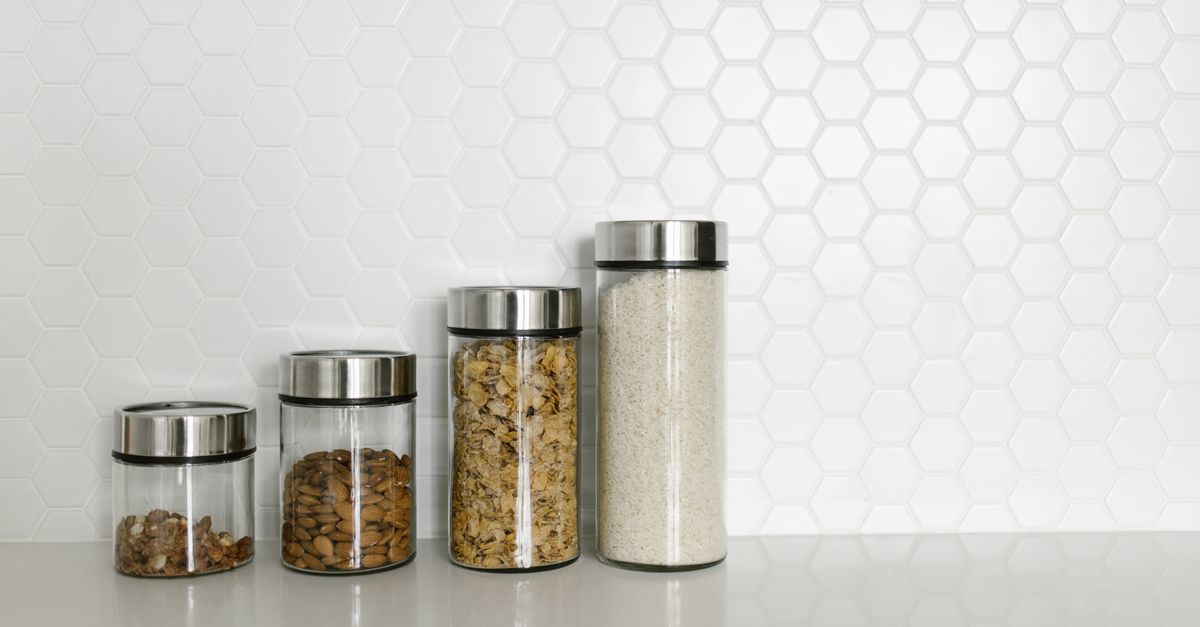
- Oxygen — the primary driver of staling. It oxidises the oils and aromatics in the bean, which is why “airtight” is the baseline requirement rather than a premium feature.
- Light — ultraviolet light accelerates the breakdown of those same volatile compounds, which is why clear glass is always a compromise and why an opaque body is worth paying for.
- Heat — general food-science guidance on oxidation rates suggests keeping beans below roughly 25°C, because every chemical reaction you are trying to slow runs faster as the temperature climbs. A cupboard beside the oven or a sunny windowsill is a bad location.
- Moisture — humidity degrades beans quickly, and it is the main reason a fridge is a poor choice for coffee you use daily.
How Long Do Beans Stay Fresh?
Manufacturer data and roaster guidance put the peak flavour window for most beans at roughly 7 to 21 days after the roast date. After that, quality does not fall off a cliff so much as fade: a noticeable but gradual decline over the following month, with sweetness muting first and papery, stale notes arriving later.
Whole beans hold up far better than ground coffee, which can lose most of its aroma within a week because grinding multiplies the surface area exposed to oxygen. Buy in smaller quantities more often rather than buying 1kg and nursing it for two months — most UK roasters sell in 250g, 500g and 1kg formats, and the smaller bags are usually the smarter purchase unless you have a very high brew volume or a freezer strategy.
What to Look For in a Coffee Bean Storage Container
Sealing and one-way valves
A true airtight seal is the baseline. Look for a silicone gasket or a mechanical clamp rather than a push-fit lid with no gasket at all, then check whether any valve is genuinely one-way — CO₂ out, oxygen not back in. Vacuum systems such as the Fellow Atmos go a step further by physically removing air from the headspace above the beans, which is a different proposition from simply containing it.
Capacity: match the container to your habits
Capacity figures are usually stated by volume in litres, which is unhelpful when you buy coffee by weight. The conversion is roughly consistent across the brands below, and the practical rule is simple: buy a container that holds one bag comfortably, not one that holds three. Every time you open a large container to scoop out a small amount, you flush the headspace with fresh oxygen.
| Container | Stated volume | Approximate bean capacity |
|---|---|---|
| Fellow Atmos small | 0.4L | ~150g |
| Fellow Atmos mid | 0.7L | ~250g |
| Fellow Atmos large | 1.2L | ~500g |
| Airscape Kilo | 1.9L | ~1kg |
| Tightvac Coffeevac | 0.5L | ~500g |
A note on UK kitchens
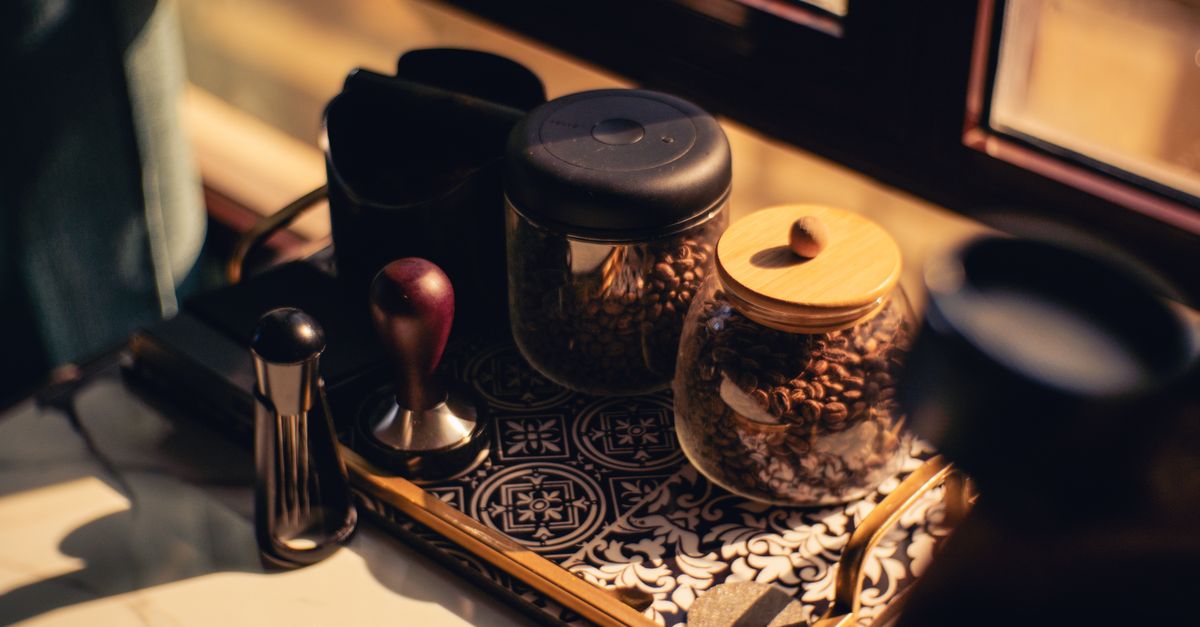
British kitchens bring two constraints that American storage advice tends to ignore: high ambient humidity for much of the year, and limited worktop and cupboard space, with no standard pantry to retreat into. The practical answer is opaque storage kept in a cool, dark cupboard rather than a display jar on the counter — you lose the aesthetic, but you gain a genuine reduction in light and temperature exposure.
The One-Way Valve Question, Resolved
This is where most storage guides get muddled, so it is worth separating the products by mechanism rather than price.
- Fellow Atmos uses a vacuum pump — there is no valve at all, because the pump removes the headspace air instead of venting it.
- OXO Good Grips Pop is gasket only. There is no valve.
- Kilner clip-top relies on a rubber gasket only.
- Tightvac Coffeevac carries a manufacturer-stated one-way valve.
So which matters? Gasket-only containers are entirely adequate for beans you will consume within approximately 7 to 10 days — a window that named UK roasters’ published storage guidance treats as the point at which freshness starts to become a real concern. Vacuum and valve systems matter most beyond that window, when the difference between “sealed” and “oxygen-free” starts to show in the cup.
There is also a free option most search results overlook. You do not need to buy anything at all to get a valve: clip the original roaster’s valve bag shut, or place that bag inside an opaque container. The roaster’s own one-way valve keeps doing exactly what it was designed to do, and you have solved the light problem for nothing.
The Best Coffee Bean Storage Containers in the UK
Fellow Atmos Vacuum Canister — overall best
Best for: anyone who wants the most effective oxygen removal available without commercial equipment.
The Atmos is a twist-to-pump vacuum canister: you turn the lid, air is drawn out of the headspace, and the vacuum holds until the indicator button is pressed and released, which is Fellow’s own published specification. It is available in three sizes — 0.4L (approximately 150g of beans), 0.7L (approximately 250g) and 1.2L (approximately 500g) — which map neatly onto the 250g and 500g bags most UK roasters sell. Expect to pay approximately £35–£50 for the 0.7L and approximately £45–£60 for the 1.2L.
Standout strength: unlike every other container here, it does not just seal the air in — it takes the air out, and Fellow’s spec confirms the vacuum is maintained rather than instantly lost.
Honest caveat: Fellow’s own FAQ states that the lid mechanism is not dishwasher-safe, so it is a hand-wash component, and the pump adds a step to every scoop.
Verdict: the pick if you want the strongest available barrier against oxidation and are happy to pay for it.
Where to buy: Amazon UK, Bella Barista and Coffee Hit.
Planetary Design Airscape Kilo — best for full 1kg bags
Best for: households that buy 1kg at a time or split a bulk order.
The Airscape takes a different approach. Planetary Design states that the inner lid displaces the headspace air as you push it down onto the beans, and that the steel body is fully opaque. At a stated 1.9L, the Kilo holds approximately 1kg of beans — the only container in this guide built around the largest standard bag size most UK roasters sell. Expect approximately £40–£55.
Standout strength: the steel body blocks light entirely, which clear glass or plastic cannot, and the plunger design gives you something to compress the headspace every time you take a scoop out.
Honest caveat: it displaces air rather than evacuating it, so the manufacturer’s own wording describes a displacement mechanism rather than a true vacuum — a thin layer of air remains around the plunger.
Verdict: the sensible choice for a 1kg buyer who wants opacity and a plunger rather than a pump.
Where to buy: Amazon UK and Lakeland.
OXO Good Grips Pop Container — best value
Best for: the everyday 250g bag and buyers who want one-handed convenience.
The Pop range is a push-button seal — press the button to create the seal, press it again to release. It is a gasket-only design with no valve. Prices sit at approximately £15–£25 depending on size, which makes it the cheapest of the “proper” containers here, and it is the easiest of the group to find on a UK high street. That price buys no valve, so it is best suited to beans you will finish inside roughly a week to ten days, per the roaster guidance covered above.
Standout strength: the one-handed mechanism is genuinely convenient mid-brew, and the wide availability means you can inspect one in person before buying.
Honest caveat: with no one-way valve, carbon dioxide from degassing has nowhere to go, so a very fresh roast can build pressure under the lid in the first days after opening.
Verdict: the best sub-£25 option for beans that move through your kitchen quickly.
Where to buy: John Lewis, Amazon UK and Dunelm.
Tightvac Coffeevac 500g — best for simplicity and travel
Best for: simplicity, travel and anyone who wants a valve without paying vacuum prices.
The Coffeevac uses a push-button mechanism and, per the manufacturer’s specification, a one-way valve. At a stated 0.5L it holds approximately 500g of beans, and it typically costs approximately £10–£15, making it one of the few budget containers in this guide with a manufacturer-stated valve. There is no pump, no gasket to align and no glass to break.
Standout strength: the valve is the feature that matters beyond the ten-day window, and it is the cheapest route to one here.
Honest caveat: the mechanism and materials feel noticeably less refined than the Fellow or Airscape, so it reads as functional rather than a countertop object.
Verdict: the best value valve container if you want freshness protection without premium materials.
Where to buy: Amazon UK.
Kilner clip-top jar (1L) — best for budget and decanting
Best for: beans you will use within a week, and for decanting from a valve bag.
The Kilner clip-top is the traditional option: a glass jar with a rubber gasket held by a wire clamp. The 1L size typically costs approximately £8–£12 and the seals are replaceable, which means the jar itself lasts indefinitely. It has no valve — the seal is the gasket alone.
Standout strength: cost and repairability. A replacement gasket is a fraction of the price of a new container, and the jar can be repurposed for anything else in the kitchen.
Honest caveat: clear glass lets UV light through, and with no valve it is the least protective option here — fine for a 250g bag you will brew through in a week, less so for a 1kg bulk buy.
Verdict: the sensible budget pick provided you treat it as a short-term container rather than long-term storage.
Where to buy: Lakeland, Dunelm and Amazon UK.
UK Buying Notes
Speciality beans now typically cost somewhere in the region of £8–£14 per 250g bag at UK roasters, so a container at the lower end of these price bands is a modest outlay relative to what you are spending on coffee itself. Note that roaster packaging varies enormously: Square Mile, Has Bean, Origin, North Star and Pact all publish their own storage guidance, and reading the wording on your roaster’s page is worth ten minutes before you buy anything — their recommendations reflect their own roast profiles and bag design.
Stock is generally reliable across Amazon UK, Lakeland, John Lewis, Dunelm, Bella Barista and Coffee Hit, though the smaller speciality sizes of the Fellow Atmos are more consistently carried by the coffee specialists than by general retailers.
Frequently Asked Questions
Do coffee beans need an airtight container? Yes, if you want them at their best. Oxygen drives the oxidation of aromatic oils, and light and moisture accelerate the decline. Square Mile, Has Bean, Origin and North Star all publish storage guidance recommending an airtight container kept cool, dark and dry. A well-sealed gasket jar is enough for beans you will finish within about a week to ten days; beyond that, vacuum or valve systems do measurably better.
Should I keep coffee beans in the fridge? Not for beans in daily use. Fridges are humid and full of competing food odours, and every time the door opens the beans meet warm, damp air that can condense on them. Has Bean’s storage guidance points to a cool, dark cupboard instead, and general food-science guidance on oxidation rates suggests keeping beans below roughly 25°C.
Can you freeze coffee beans in the original bag? Yes, and it is the cheapest effective method. Squeeze the excess air out, clip the bag shut and freeze it — the roaster’s own one-way valve keeps working, letting carbon dioxide out without letting oxygen in. The freezer question divides the home-barista community, so if you are unsure, read the storage pages from Square Mile, Has Bean, Origin and North Star before committing a full kilo.
How long do coffee beans last after opening? Opening the bag does not reset the clock, because the roast date still governs. Manufacturer data and roaster guidance put the peak window at roughly 7 to 21 days after roasting, with a gradual decline over the following month. An airtight container buys you days of extra quality, not weeks.
Is a vacuum container better than a valve bag? For beans you will finish within roughly a week to ten days, usually not — the roaster’s valve bag or a sealed gasket jar is plenty. Beyond that window the gap widens. Fellow’s published spec states the Atmos holds its vacuum until the indicator button is pressed and released, which removes headspace air that a valve bag merely vents past.
Do coffee beans go stale faster ground or whole? Ground, and by a wide margin. Grinding exposes far more surface area to oxygen, so pre-ground coffee can lose most of its aroma within a week, while whole beans in an airtight container typically hold their peak for two to three weeks. It is why UK roasters such as North Star and Origin sell their coffee as whole bean, leaving grinding to the drinker.
The Bottom Line
Storage is one of the cheapest upgrades in home coffee, and the decision comes down to how fast you drink. If a 250g bag lasts you a week to ten days, a Kilner clip-top at approximately £8–£12 or an OXO Good Grips Pop at approximately £15–£25 is genuinely sufficient. If you buy 1kg at a time or brew slowly, the Airscape Kilo at approximately £40–£55 and the Fellow Atmos at approximately £35–£60 earn their keep by doing something a gasket cannot — removing or displacing the air that stales your beans. Whichever you choose, keep it out of the light, out of the heat, and away from the kettle.